
Creosote Removal in Woodbury and West Deptford, NJ: What You Can Handle and What You Shouldn’t
Creosote doesn’t announce itself. It builds up quietly over dozens of fires, and by the time a West Deptford homeowner notices a tarry smell or sees dark streaking around the damper, there may already be enough accumulation inside the flue to increase the risk of a chimney fire. NFPA 211, the standard governing chimneys and fireplaces in the U.S., identifies creosote buildup as a significant chimney fire hazard.
In Gloucester County, where older colonials and split-levels throughout Woodbury, West Deptford, and Deptford Township often have clay tile flues that were installed decades ago, the condition of the chimney matters. Here’s an honest breakdown: some maintenance tasks you can handle yourself, while others genuinely require professional equipment and training.
What Creosote Actually Is, and Why Stage Matters
When wood burns, especially at lower temperatures, it produces gases and smoke that contain unburned compounds. As those gases cool against the flue walls, they condense. The result is creosote, which can appear in different forms depending on how it has accumulated.
Stage 1 is generally a flaky, dusty deposit that looks like the gray or black soot most people picture. Stage 2 is a heavier, tar-like buildup that adheres to masonry and liner surfaces. Stage 3 is a thick, hardened, shiny coating that can resemble road tar and is significantly more difficult to remove.
A homeowner who burns properly seasoned hardwood with good draft and a properly sized flue may primarily encounter lighter deposits. Someone burning unseasoned wood, running low smoldering fires through a Woodbury winter, or going several years without a professional cleaning may have heavier buildup without realizing it.
What a Capable Homeowner Can Safely Handle
Be honest with yourself here. If you’re comfortable working on a ladder and your chimney is safely accessible, there are some maintenance tasks you can handle yourself.
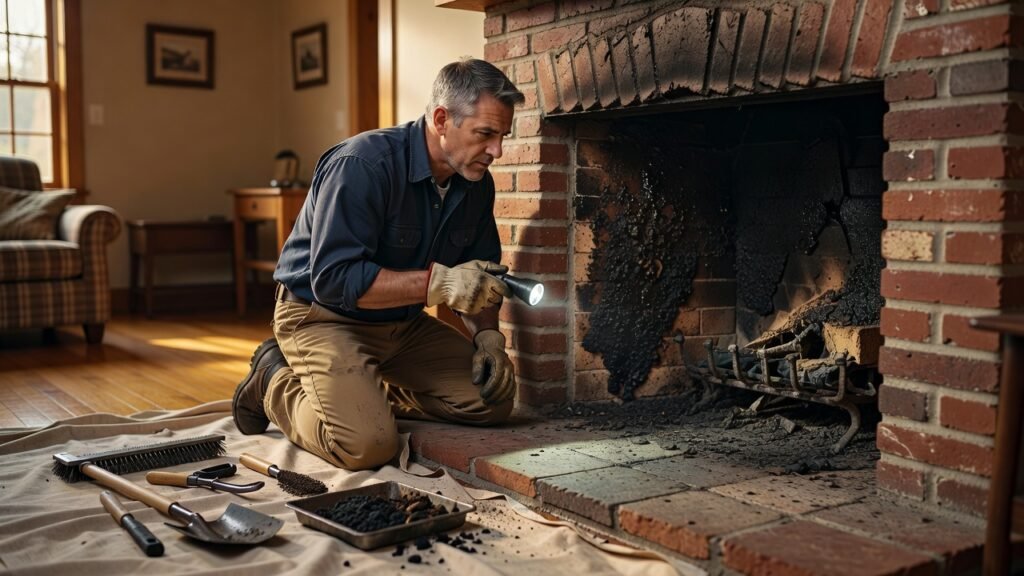
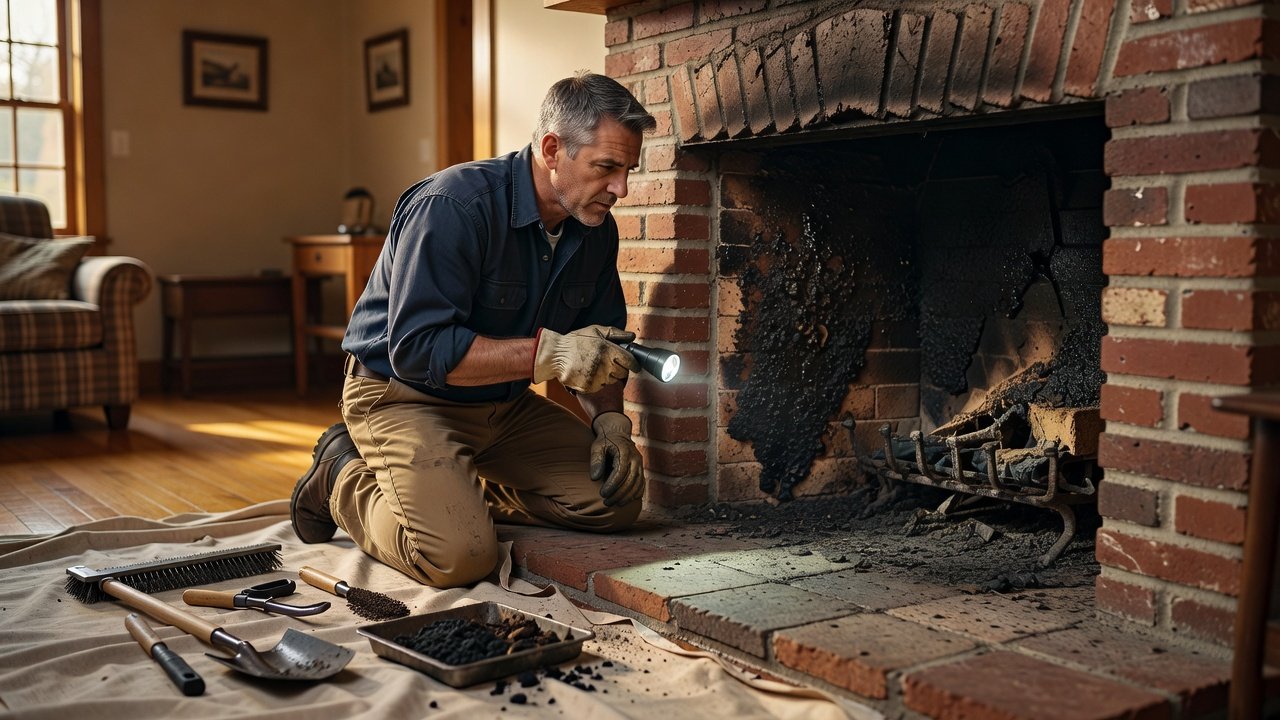
Light creosote removal on a straight flue. If a professional inspection has confirmed light, flaky buildup and you have a simple flue with no unusual configuration, a capable homeowner may be able to use an appropriately sized chimney brush with fiberglass rods. Drop cloths, eye protection, and appropriate respiratory protection are important when working around soot and creosote. A vacuum designed to safely handle fine ash can help with cleanup.
Fireplace glass and firebox cleaning. The glass on gas inserts and wood stoves can accumulate residue that specialty fireplace glass cleaner is designed to remove. Sweeping loose ash from the firebox with an appropriate brush and ash vacuum is also basic maintenance.
Creosote-reducing products. Some products are marketed to help condition certain types of creosote buildup between professional cleanings. These products should be treated as supplemental maintenance, not a replacement for inspection or mechanical cleaning when significant buildup is present.
Checking and clearing the damper. A functioning throat damper is generally visible and accessible from inside the firebox. Homeowners can check whether it moves properly and looks for obvious debris or damage. If the damper is stuck, badly corroded, or damaged, call a professional.
When You Need to Call a Professional and Why It’s Not Just a Sales Pitch
Heavy or glazed creosote. This is where the line between basic maintenance and professional cleaning becomes important. Heavier deposits may require specialized brushes, rotary equipment, or chemical treatment. Glazed creosote can be particularly difficult to remove with standard homeowner equipment.
Any chimney that hasn’t been inspected recently. A professional chimney sweep should evaluate the system for more than just creosote. Cracks in the flue liner, deteriorated mortar joints, damaged crowns, and other problems in older West Deptford homes may not be visible from the firebox. A camera inspection may be appropriate when the condition of the flue cannot be adequately evaluated through accessible areas.
Flue liner damage. If a chimney fire has occurred, even one you may not have recognized at the time, the liner should be professionally evaluated before the fireplace is used again. A damaged liner can create serious fire and combustion-gas hazards.
Offset flues and unusual configurations. Some Woodbury-area homes have chimneys with angled or otherwise complicated flue configurations. Cleaning these systems can require specialized equipment and experience. Standard homeowner rods and brushes may not adequately reach or clean every section.
Gas appliance venting. Leave gas venting work to a qualified professional. Venting problems involving gas fireplaces or inserts can allow combustion gases, including carbon monoxide, to enter the home. These systems require different inspection and service procedures than wood-burning fireplaces.
What Goes Wrong When Creosote Is Left or Cleaned Incorrectly
A chimney fire involving significant creosote buildup may not look like a movie fire. It can produce a low roaring sound, heavy smoke, or visible sparks from the chimney opening. High temperatures can damage masonry, crack clay tile liners, and potentially ignite combustible materials around the chimney.
Beyond the fire risk, incomplete cleaning can create a false sense of security. Removing some visible debris from a flue does not necessarily mean that all significant buildup has been removed. Heavy or glazed deposits may remain attached to the liner even after a basic brushing.
That’s why the condition of the flue should be assessed before deciding whether a DIY cleaning is appropriate.
What Creosote Removal Costs in Gloucester County
A professional chimney sweeps in the Woodbury and West Deptford area typically charges between $175 and $275 for a standard cleaning and Level 1 inspection combined.
More extensive creosote removal can cost more depending on the type and amount of buildup, flue length, accessibility, and equipment required. Stage 2 removal may run approximately $250 to $400, while more extensive treatment can reach $400 to $700 or more. Liner repairs, masonry work, and other structural repairs are priced separately.
For homeowners handling basic maintenance themselves, the initial cost of an appropriately sized brush, rods, respiratory protection, and an ash-rated vacuum can range from approximately $80 to $150. However, DIY equipment does not replace a professional inspection when the condition of the chimney or flue is unknown.
Frequently Asked Questions About Creosote Removal in Gloucester County, NJ
1. How can I tell if I have creosote buildup in my chimney?
Common signs include black or shiny deposits inside the flue, a strong smoky or tar-like odor, and dark staining around the damper or fireplace. However, creosote can accumulate in areas that are difficult to see from the fireplace opening. A professional chimney inspection is the most reliable way to determine how much buildup is present and what type it is.
2. Can I remove creosote from my chimney myself?
Light, flaky deposits in a simple, straight flue may be manageable for a capable homeowner with the correct chimney brush and safety equipment. DIY cleaning becomes much less appropriate when deposits are heavy, hardened, or glazed, or when the condition of the liner is unknown. Professional equipment may be needed to remove stubborn deposits safely and thoroughly.
3. Is glazed creosote dangerous?
Yes. Glazed creosote is a hardened, highly combustible deposit that can be difficult to remove with a standard chimney brush. Because it can remain attached to the liner even after basic brushing, significant glazed buildup should be evaluated and treated by a qualified chimney professional before the fireplace is used again.
4. How often should I have my chimney inspected for creosote?
An annual chimney inspection is a good maintenance practice, especially for homes that regularly use wood-burning fireplaces or stoves. Cleaning frequency depends on how often the appliance is used, the type of wood burned, how efficiently fires burn, and how quickly deposits accumulate. If you notice heavy buildup or have experienced a chimney fire, have the system professionally evaluated before using it again.
5. Does chimney sweeping remove all types of creosote?
Not necessarily. Light, flaky creosote can often be removed with conventional chimney brushes, while heavier or glazed deposits may require specialized equipment or additional treatment. A sweep should assess the condition and type of buildup before determining the appropriate cleaning method. Simply brushing the visible portion of the flue does not guarantee that all creosote has been removed.
Serving Woodbury, West Deptford, and Gloucester County
Chimney Evergreen works with homeowners across South Jersey, from Woodbury and West Deptford to Deptford, Mantua, and the surrounding area. We inspect and clean chimneys to CSIA standards and help homeowners understand what their systems actually need before the heating season begins.
If you haven’t had a professional look at your flue this year, or you’re not sure what type of buildup you’re dealing with, a professional inspection is a good starting point.
Contact us to schedule your inspection and get a straightforward assessment of your chimney before you light another fire this fall.
Related from Evergreen Chimney Woodbury NJ: Chimney Cleaning in Woodbury, NJ Professional Service by Evergreen Chi