
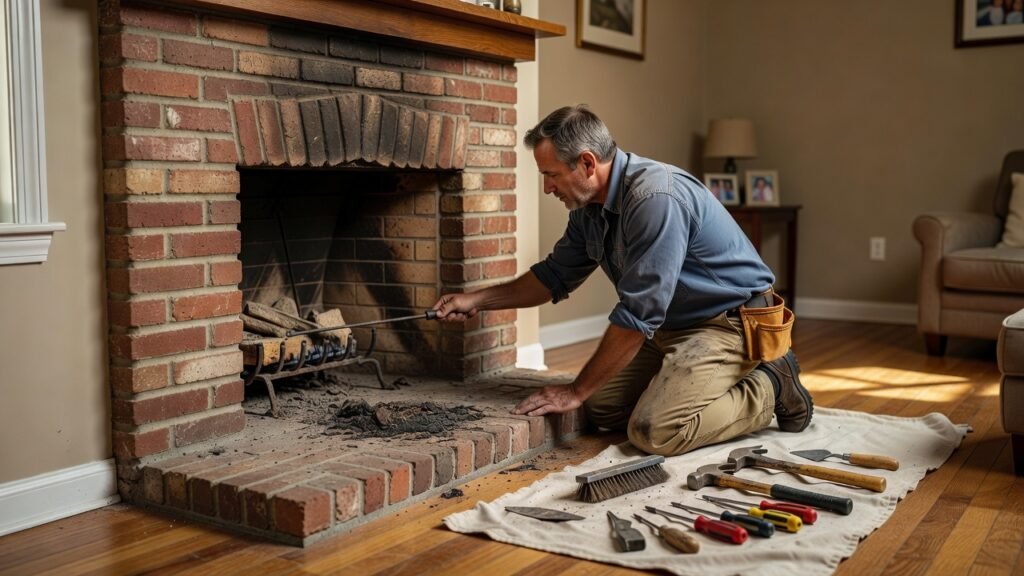
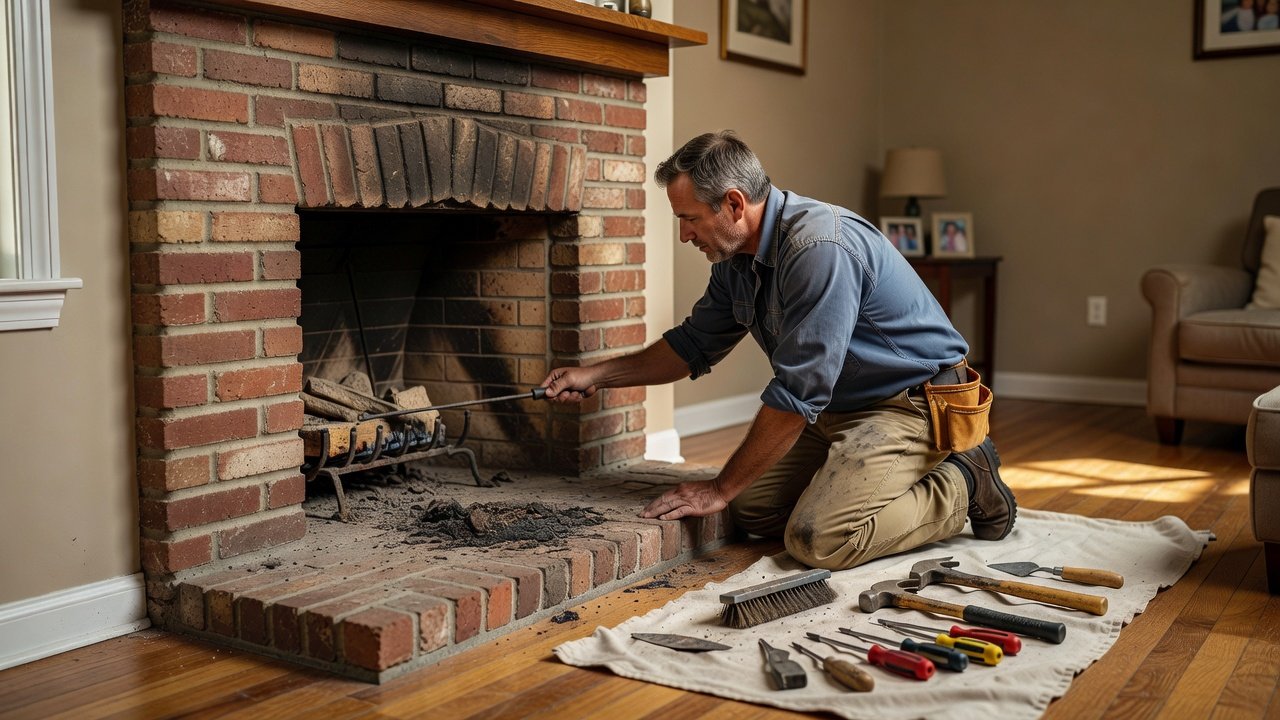
Fireplace Repair in Mantua and Deptford: What You Can Do Yourself and When to Call a Professional
Fireplace problems often appear just when you need your fireplace the most. You might notice a cracked firebrick, a damper that won’t open properly, or smoke entering your living room instead of traveling safely up the chimney. While some basic maintenance tasks can be handled by homeowners, many fireplace repairs require specialized knowledge to ensure your home remains safe.
This guide explains what you can safely inspect and maintain yourself, when it’s time to call a professional, and how regular inspections can prevent costly repairs throughout Mantua, Deptford, and the surrounding Gloucester County area.
Before You Use Your Fireplace
Before lighting your first fire of the season, perform a basic visual inspection of your fireplace.
According to NFPA 211, homeowners should never operate a fireplace if there is reason to believe the chimney or fireplace system has been compromised. Damage inside the firebox or chimney liner can allow dangerous gases, including carbon monoxide, to enter your home.
Gather a flashlight, work gloves, and a notepad to document anything unusual.
Many homes throughout Mantua, Deptford, and Gloucester County were built decades ago with original clay tile chimney liners. Over time, repeated heating and cooling cycles, moisture intrusion, and age can cause these liners to crack or deteriorate.
Step 1: Inspect the Fireplace Damper
Open the damper completely and shine a flashlight upward through the flue.
A properly functioning damper should:
- Open and close smoothly.
- Remain securely in the open position.
- Seal reasonably well when closed.
- Show no excessive rust or damage.
Safe DIY Maintenance
Homeowners can safely:
- Remove light surface rust.
- Clean debris around the damper.
- Lubricate moving metal components using a high-temperature lubricant.
Call a Professional If:
- The damper will not open.
- The damper will not remain open.
- The frame is warped.
- The damper plate is cracked.
- Excessive corrosion prevents proper operation.
A damaged damper reduces fireplace efficiency and may create unsafe operating conditions.
Step 2: Examine the Firebox
Inspect every firebrick and mortar joint inside the firebox.
Look for:
- Cracked bricks
- Loose bricks
- Missing mortar
- Spalling brick surfaces
- Separation between walls
Minor mortar deterioration is common in older fireplaces.
Safe DIY Maintenance
Small mortar joints may be repaired using high-temperature refractory mortar designed specifically for fireplaces.
Never use standard masonry mortar inside a firebox because it cannot withstand fireplace temperatures.
Call a Professional If:
- Bricks are cracked completely through.
- Multiple bricks have shifted.
- Large sections of mortar are missing.
- Firebox walls are separating.
Structural firebox damage requires professional repair to prevent heat from reaching nearby combustible materials.
Step 3: Inspect the Smoke Chamber
The smoke chamber directs smoke from the firebox into the chimney flue.
Using a flashlight, inspect for:
- Heavy creosote buildup
- Open mortar joints
- Rough brick surfaces
- Visible deterioration
Safe DIY Maintenance
Homeowners should limit this step to a visual inspection only.
Call a Professional If:
- Thick creosote deposits are present.
- Mortar joints have opened.
- The smoke chamber shows structural deterioration.
- Smoke frequently enters the room during fireplace use.
Professional smoke chamber repairs improve draft while reducing creosote accumulation.
Step 4: Check the Fireplace Lintel
The lintel supports the masonry above the fireplace opening.
Inspect for:
- Rust
- Sagging
- Cracked masonry
- Uneven brickwork
Safe DIY Maintenance
Photograph any visible concerns for future comparison.
Call a Professional If:
- The lintel appears to sag.
- Cracks extend into surrounding masonry.
- Brick movement is visible.
Lintel damage can compromise the structural integrity of the fireplace and should not be ignored.
Step 5: Test the Chimney Draft
Before lighting your first fire, perform a simple draft test.
Hold a lit match or incense stick near the open damper.
Smoke should move upward into the chimney.
If smoke enters the room, slightly open a nearby window and repeat the test.
If the draft improves, your home may have a pressure imbalance rather than a chimney obstruction.
Call a Professional If:
- Smoke continues entering the room.
- A cold downdraft persists.
- Draft remains weak with an open window.
Professional chimney inspections can identify problems involving chimney height, venting, chimney liners, or chimney caps.
Step 6: Schedule an Annual Chimney Inspection
Even if your fireplace appears to function normally, annual inspections remain essential.
A Level 1 chimney inspection typically includes:
- Firebox inspection
- Chimney flue evaluation
- Damper inspection
- Chimney cap inspection
- Masonry evaluation
- Basic venting assessment
Routine inspections frequently uncover problems long before they become major repairs.
Common Causes of Smoke Entering Your Home
If smoke enters your living room during fireplace use, possible causes include:
- Closed or partially closed damper
- Blocked chimney
- Poor draft
- Damaged chimney liner
- Excessive creosote buildup
- Improper fireplace opening dimensions
- Animal nests
- Pressure imbalances inside the home
A smoke guard may improve performance in certain fireplaces with oversized openings, but persistent smoke problems should always be professionally evaluated.
Why Preventive Fireplace Maintenance Matters
Routine inspections help identify:
- Firebox deterioration
- Chimney liner damage
- Water intrusion
- Masonry deterioration
- Creosote buildup
- Chimney cap damage
- Drafting problems
Early maintenance helps reduce repair costs while improving fireplace safety and efficiency.
Frequently Asked Questions
1. Can I repair my fireplace myself?
Homeowners can safely perform basic maintenance such as cleaning the firebox, removing cooled ashes, lubricating the damper, and repairing small mortar joints with refractory mortar. Structural fireplace repairs should always be handled by a qualified professional.
2. How do I know if my fireplace needs repair?
Warning signs include cracked firebricks, damaged mortar joints, smoke entering your home, poor draft, rusted dampers, unusual odors, water stains, or visible chimney damage.
3. How often should my fireplace be inspected?
The National Fire Protection Association recommends that fireplaces and chimneys be inspected at least once each year, even if they are used only occasionally.
4. Why does smoke come back into my living room?
Smoke rollout may result from poor chimney draft, chimney blockages, excessive creosote buildup, damaged chimney liners, pressure imbalances, or improper fireplace design. A professional inspection can determine the exact cause.
5. What is included in a Level 1 chimney inspection?
A Level 1 inspection generally includes evaluation of the accessible portions of the chimney, firebox, flue, damper, chimney cap, and visible masonry to verify that the fireplace system is operating safely and efficiently.
Schedule Your Fireplace Inspection Today
Whether you’ve noticed visible fireplace damage or simply want peace of mind before the heating season begins, a professional inspection is the safest way to identify hidden issues before they become expensive repairs.
Chimney Evergreen proudly serves homeowners throughout Mantua, Deptford, Woodbury, and surrounding Gloucester County communities with professional fireplace repairs, chimney inspections, chimney cleaning, masonry repairs, and comprehensive chimney maintenance. Our CSIA-certified chimney professionals provide honest recommendations, detailed inspection reports, and transparent pricing without unnecessary upselling. Contact us today to schedule your free fireplace inspection consultation and prepare your fireplace for a safe and efficient heating season.