
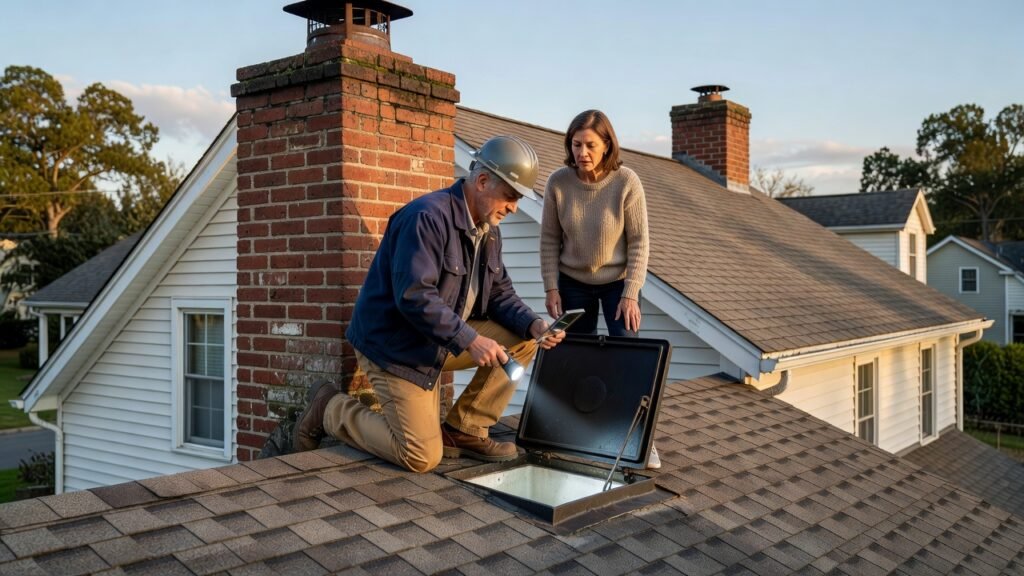
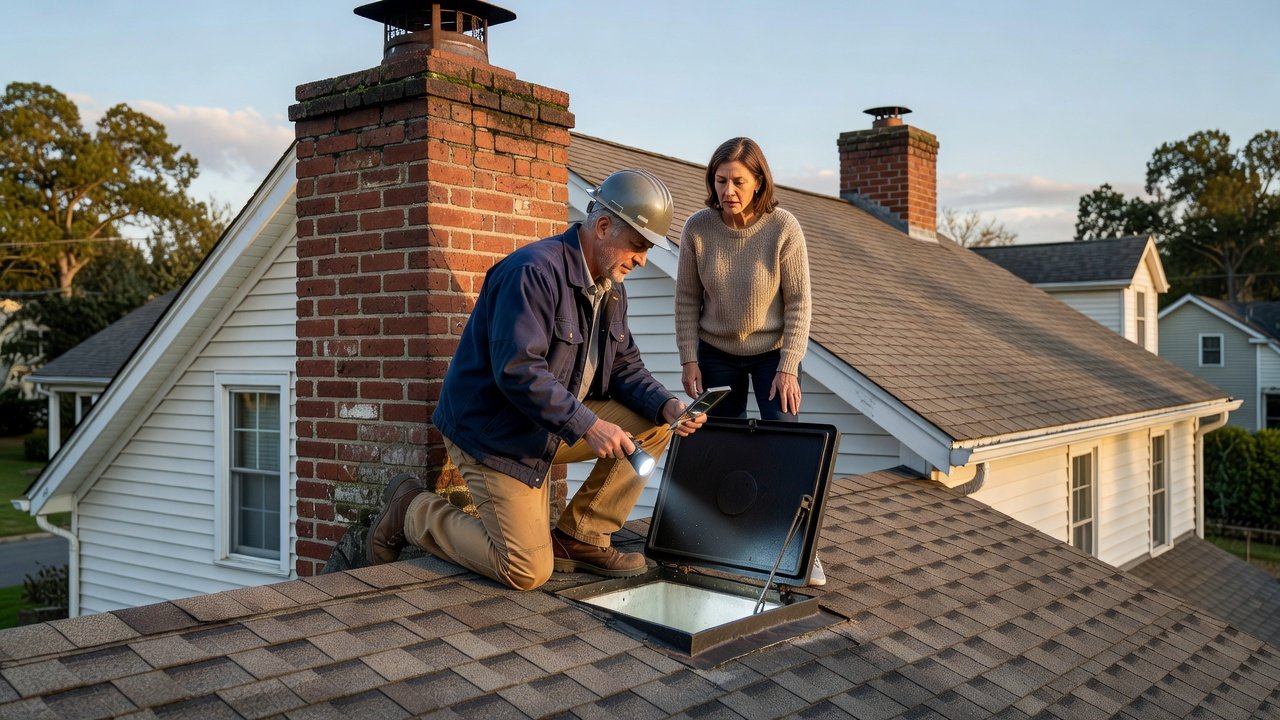
What’s Actually Wrong with Your Chimney and What Glassboro Homeowners Keep Getting Wrong About Fixing It
Most chimney problems do not announce themselves with a dramatic house fire. They often show up quietly as a faint smoky smell, a draft that never feels quite right, or a chimney cap that looks damaged from the driveway.
The problem is that homeowners in Glassboro, Woodbury, and throughout Gloucester County may wait too long or attempt a repair that addresses the symptom without fixing the underlying cause.
This guide covers six common chimney problems, what they can mean, and what a proper professional repair may involve.
Creosote Buildup That Gets Mistaken for a “Dirty Chimney”
There is a difference between a chimney that needs routine cleaning and one with heavy or hardened creosote deposits.
Creosote forms as a byproduct of burning wood. The amount and type of buildup depend on factors such as wood moisture, burning practices, appliance design, and chimney conditions.
Light deposits may be removable with standard cleaning methods. Heavier or glazed deposits can require additional equipment or specialized cleaning methods.
Homeowners may notice an unusual chimney odor, reduced draft, or visible deposits. However, these signs do not always indicate the severity of the buildup.
The best way to determine what you are dealing with is through an appropriate chimney inspection.
A professional sweep can evaluate the flue and determine what type of cleaning is needed.
Can Creosote Buildup Be Prevented?
You can reduce the likelihood of excessive buildup by burning properly seasoned firewood and following the manufacturer’s instructions for your fireplace or stove.
Wood with a moisture content around 20% or lower is commonly recommended for efficient burning.
Regular inspections and cleaning when needed can also help prevent deposits from accumulating to problematic levels.
Spalling Brick That Homeowners Treat With Sealant
Spalling occurs when brick begins to crack, chip, or lose its outer surface.
Moisture is a common contributor. Water can enter masonry and repeated freezing and thawing can contribute to deterioration.
The visible brick damage, however, may not be the actual source of the water.
The moisture could be entering through:
- A cracked or deteriorated chimney crown
- Damaged or missing chimney cap
- Deteriorated mortar joints
- Failed chimney flashing
- Other areas where water can enter the chimney system
Applying sealant directly over damaged brick does not necessarily address the source of the moisture.
A professional should first determine how water is entering the chimney. The appropriate repair may involve masonry work, crown repair, flashing repair, or another solution.
If the damage extends beyond the visible exterior, a more detailed inspection may also be appropriate.
Smoke Backdraft That Gets Blamed on the Damper
When smoke enters the room, many homeowners immediately suspect the damper.
Sometimes the damper is the problem. However, smoke backup can have several possible causes.
One possibility is negative pressure inside the home. Exhaust fans, tightly sealed buildings, and other conditions can affect the pressure balance and chimney draft.
Other potential causes include:
- An obstruction in the chimney
- An improperly sized flue
- A chimney that does not draft properly
- A cold flue
- Problems with the fireplace design
- Other venting issues
Opening a window may sometimes temporarily improve draft, but that does not necessarily identify or solve the underlying problem.
A professional evaluation should consider the fireplace, flue, chimney height, house pressure, and overall venting configuration before a repair is recommended.
Replacing the damper alone will not solve every draft problem.
Mortar Joint Failure That Goes Undetected for Years
Mortar joints are designed to weather and can eventually deteriorate.
The problem is that homeowners may not notice failing mortar from the ground. Recessed joints, cracks, crumbling sections, or missing mortar can allow additional moisture into the masonry.
White efflorescence on the chimney can also indicate moisture movement through the masonry.
When caught early, deteriorated mortar can often be repaired through tuckpointing or repointing. The damaged material is removed and replaced with new mortar that is compatible with the existing masonry.
If deterioration has continued for years, additional brick or structural repairs may be necessary.
What Does Tuckpointing Cost?
A localized tuckpointing project may cost approximately $500 to $1,500, depending on the chimney’s height, accessibility, and the amount of masonry requiring repair.
Other repairs can add to the total. A crown repair may cost several hundred dollars, while extensive liner work can reach several thousand dollars.
These are general estimates rather than fixed Gloucester County prices. A written inspection and estimate should determine the actual scope and cost.
A Liner Crack Homeowners May Not Know Exists
The chimney liner plays an important role in safely containing and directing combustion gases.
A damaged or deteriorated liner can affect how the chimney performs and may increase the risk of combustion gases or heat reaching areas where they should not.
The difficult part is that liner damage may not be visible from the fireplace.
A more detailed inspection, including video examination of the flue when appropriate, can help identify cracks, gaps, deterioration, or other interior problems.
A Level 2 inspection may be appropriate in situations such as a property transfer, a change to the heating appliance or venting system, or when other conditions warrant a more detailed evaluation.
This can be especially important in older Glassboro homes where heating systems may have been modified over the years.
If a home has been converted from one fuel type to another, ask a qualified professional to confirm that the existing venting system is appropriate for the current appliance.
Chimney Cap Problems Homeowners Ignore Until Animals Move In
A missing or damaged chimney cap can allow rain, leaves, debris, and animals to enter the chimney.
Birds and small animals may use an unprotected chimney as a nesting or shelter location. The resulting debris can create additional maintenance concerns.
A damaged cap can also allow more moisture into the chimney system.
The appropriate replacement depends on the chimney’s design and flue configuration. Stainless steel is one commonly used option because of its durability and resistance to corrosion.
If there are signs that an animal has entered the chimney, the interior should be evaluated before simply installing a new cap.
Animal removal may also require additional considerations depending on the species and local wildlife regulations.
What Glassboro Homeowners Should Do When They Find a Problem
The biggest mistake is focusing only on the visible symptom.
A damaged brick may actually be caused by water entering through the crown. A draft problem may have nothing to do with the damper. A chimney odor may require more than a routine cleaning.
Before approving repairs, ask the contractor:
- What exactly is damaged?
- What caused the damage?
- Can you show me photographs of the problem?
- What repair do you recommend?
- What happens if the problem is left untreated?
- What is included in the estimate?
- Are there any additional repairs that may be needed?
For major repairs, consider getting a second opinion and comparing written scopes of work.
Schedule a Chimney Inspection in Glassboro or Woodbury
If you have noticed a seasonal chimney smell, unusual draft, deteriorating brick, damaged mortar, or a chimney cap that needs attention, do not assume the problem will disappear on its own.
A professional inspection can help identify the actual source of the problem before you spend money on the wrong repair.
Chimney Evergreen serves Glassboro, Woodbury, Deptford, Mantua, and surrounding Gloucester County communities. The company states that its inspections follow NFPA 211 standards and are performed by CSIA-certified technicians.
Contact the company to schedule an inspection and get a clear assessment of what your chimney actually needs.
The goal is not simply to fix what you can see. It is to find the underlying problem and address it properly.
Related from Evergreen Chimney Woodbury NJ: Chimney Cleaning in Woodbury, NJ Professional Service by Evergreen Chi · Chimney Sweep in Woodbury, NJ — Evergreen Chimney · Chimney Sweep in Woodbury, NJ — Evergreen Chimney