
Creosote Removal Woodbury Heights NJ: What Homeowners Should Know
Many homeowners in Woodbury Heights do not think about creosote until they notice a smoky room, a chimney odor, or another sign that something is wrong. Creosote is a byproduct of burning wood and can accumulate inside a chimney or flue. The amount and type of buildup depend on factors such as how often the system is used, the fuel burned, the installation, and burning habits. When deposits become excessive, professional cleaning may be necessary.
The important question is not simply how old the buildup is. It is what type of deposit is present, how much has accumulated, and whether the chimney or venting system has other problems. Here is what homeowners in Woodbury Heights, Woodbury, Deptford, and Mantua should know about creosote removal and chimney inspections.
What Creosote Buildup Can Look Like
Loose Soot and Ordinary Creosote
Some chimney deposits are loose and relatively easy for a professional to remove with standard sweeping equipment. This does not mean the chimney can be ignored. CSIA recommends that chimneys, fireplaces, and vents be inspected at least once a year, while cleaning and maintenance should be performed when needed.
For masonry fireplaces, CSIA recommends sweeping when sooty buildup reaches about 1/8 inch or sooner if glaze is present. The appropriate cleaning interval can vary based on use, fuel type, installation, and burning habits.
Hard, Tacky, or Glazed Deposits
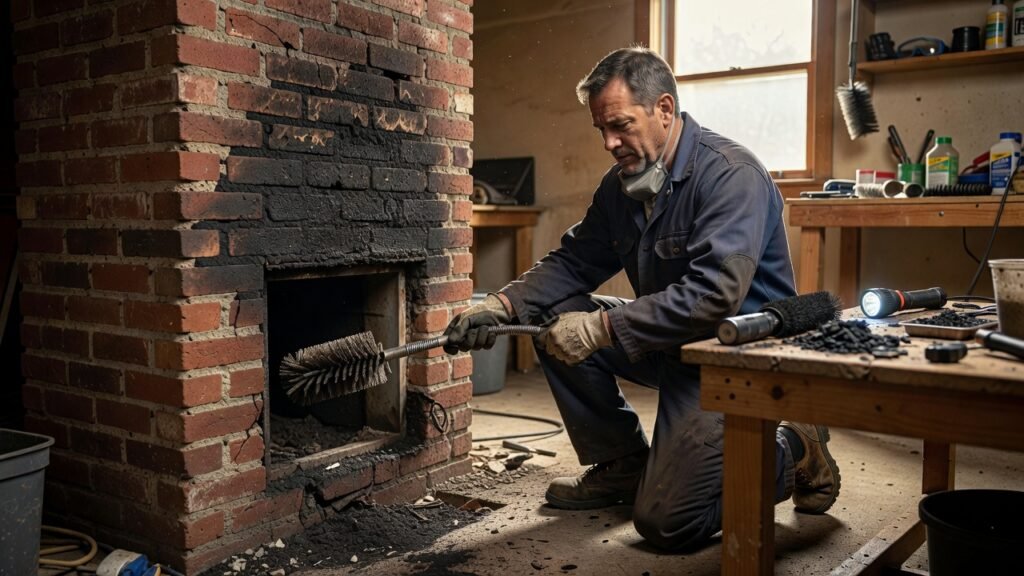
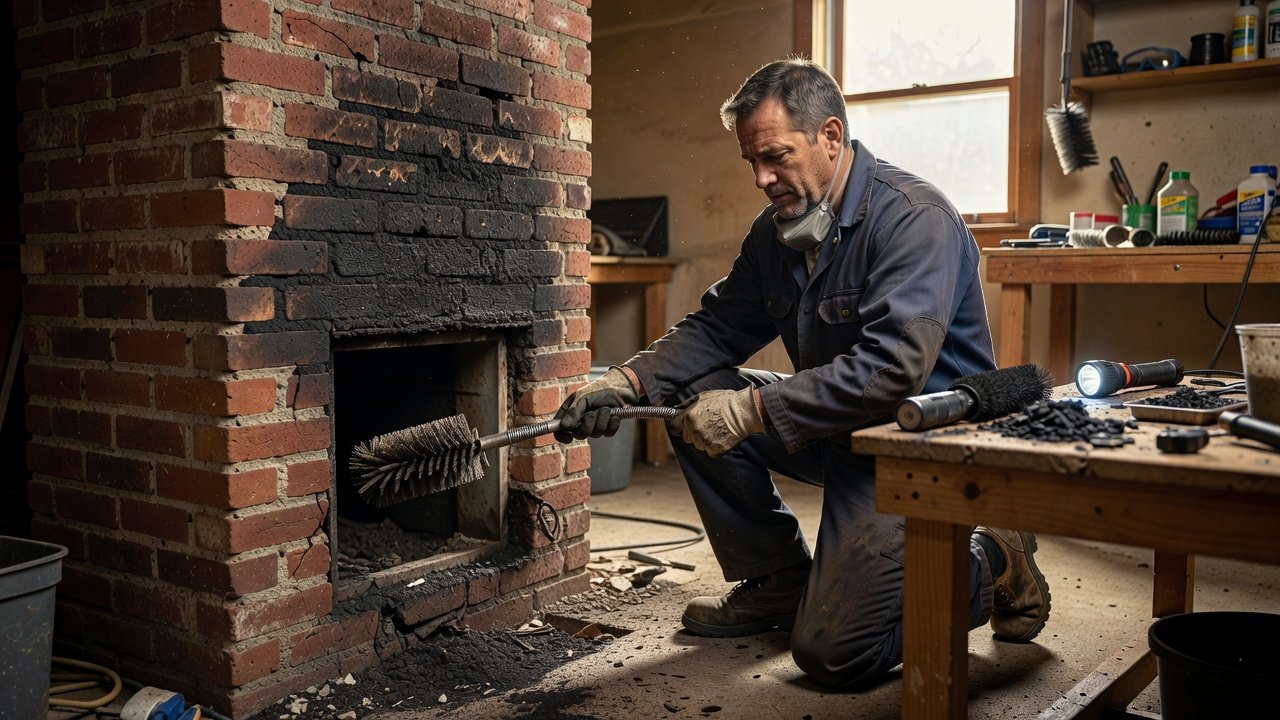
Creosote does not always remain as loose soot. Some deposits can become hard, tacky, or glazed. These deposits can be more difficult to remove with ordinary brushing.
The cause can include conditions that allow flue gases to cool and condensation to occur inside the chimney. Burning wet wood can also produce more smoke and creosote. EPA guidance recommends using dry, seasoned wood because it burns more efficiently and produces less smoke and creosote.
The cleaning method should be based on the condition of the deposit. CSIA notes that mechanical cleaning can be used for hard creosote or glaze, while qualified professionals may also use chemical products in conjunction with mechanical cleaning. Chemical products should not be treated as a replacement for professional inspection and mechanical cleaning.
Creosote Along With a Damaged Flue
Creosote buildup is not always the only concern discovered during a chimney inspection. A professional may also find damaged flue components, cracks, obstructions, or other conditions that affect how the chimney operates.
If there is a concern that the chimney has been damaged, the appropriate inspection level depends on the circumstances. A Level 2 inspection is recommended by CSIA in situations such as a property sale, a planned relining, a building or chimney fire, a weather or seismic event, an operating malfunction that may have caused damage, or when a Level 1 inspection is not enough to determine whether the venting system is serviceable. A Level 2 inspection includes a video scan or similar internal examination of the chimney.
This is different from saying that every chimney cleaning or every creosote problem automatically requires a Level 2 inspection.
Creosote Around a Wood Stove or Insert Connection
Wood stoves and inserts connected to masonry chimneys require the entire venting system to be evaluated as a system. The connector, appliance, chimney, liner, clearances, and installation requirements all matter.
If an installation is being changed or a new appliance is being connected, the chimney professional may need to determine whether the existing venting system is suitable for the appliance. CSIA recommends a Level 2 inspection when conditions of use are changing, such as adding or replacing an appliance with a dissimilar one.
Homeowners in Woodbury Heights, Mantua, Deptford, and nearby Gloucester County communities should avoid assuming that a stainless steel liner is automatically the solution. The correct liner and installation depend on the appliance, chimney, manufacturer requirements, applicable codes, and the condition of the existing system.
New Jersey’s current construction codes include the 2024 International Residential Code and 2024 International Mechanical Code, both adopted by the state on August 17, 2026. Applicable work should be evaluated under the current New Jersey requirements.
When Should You Schedule Creosote Removal?
There is no universal calendar date that guarantees a chimney will be easier or cheaper to service. September may offer more scheduling flexibility than later in the fall, but homeowners should not assume that November service is automatically too late.
The more important consideration is whether the chimney has been inspected and cleaned when necessary before regular use. CSIA recommends annual inspection, while the need for cleaning depends on the amount and type of deposits and the way the chimney is used.
Scheduling before heavy fireplace use can also give a homeowner time to address problems discovered during the inspection rather than discovering them after the heating season has already started.
What Makes Creosote Removal More Complicated?
The final cost and scope of a chimney cleaning cannot be determined accurately from location alone. A professional may need to consider:
- Amount of soot and creosote buildup
- Whether the deposits are loose, hard, tacky, or glazed
- Chimney height and configuration
- Type of fireplace, stove, or insert
- Accessibility of the chimney
- Condition of the flue liner
- Presence of offsets or other difficult areas
- Whether repairs or additional inspection are needed
- Whether the appliance or fuel type has changed
A straightforward cleaning may require only standard sweeping. Heavier or harder deposits can require additional cleaning techniques. If an inspection reveals structural or venting problems, those issues may need to be addressed separately.
What Should Homeowners Do If They Smell Smoke?
A persistent smoke smell should not automatically be blamed on creosote. It can have several possible causes, including airflow or chimney problems.
CSIA notes that chimney odors can be associated with creosote deposits and pressure conditions that draw air down the chimney. If smoke is entering the home while a fireplace or wood stove is operating, stop using the appliance and have the system evaluated by a qualified professional rather than attempting to diagnose the problem by trial and error.
Why Professional Inspection Matters
A chimney inspection is about more than determining whether the flue needs sweeping. The inspection can help identify deposits, obstructions, damage, installation concerns, and other conditions that may affect the chimney’s safe operation.
A Level 1 inspection may be appropriate for a routine evaluation when there have been no significant changes to the system. A Level 2 inspection provides a more extensive evaluation when specific circumstances make it appropriate, including certain appliance changes, property sales, relining projects, chimney fires, or suspected damage.
The goal is to match the inspection and cleaning method to the actual condition of the chimney rather than automatically recommending the most extensive service.
Creosote Removal in Woodbury Heights, NJ
For homeowners in Woodbury Heights, Woodbury, Deptford, Mantua, and surrounding Gloucester County communities, the safest approach is to have the chimney inspected regularly and cleaned when deposits warrant it.
Do not rely on the appearance of the fireplace alone to determine whether the chimney is clean. Creosote can accumulate inside areas that are not easily visible from the firebox. If deposits are present, the appropriate cleaning method should be determined by their condition and the construction of the chimney.
If your chimney has not been inspected recently, scheduling an evaluation before regular wood-burning use can help identify creosote buildup or other problems before they become more difficult to address.
Related from Evergreen Chimney Woodbury NJ: Chimney Sweep Services in Woodbury, NJ