
Published October 27, 2026
Chimney Cleaning in Woodbury, NJ: What You Can Handle and When to Call a Pro
Creosote can build up inside a chimney without obvious warning signs. Over time, this residue from burning wood can increase the risk of a chimney fire and restrict the safe passage of smoke and combustion gases. Woodbury homeowners may not notice a problem until smoke enters the room, unpleasant odors develop, or a professional inspection reveals significant buildup. Understanding which maintenance tasks you can handle yourself and when to call a professional can help protect your home and keep your fireplace operating safely.
What Does Chimney Cleaning Actually Involve?
Chimney cleaning involves removing soot, creosote, and other debris from the flue and other areas of the fireplace system where deposits accumulate. Creosote forms when combustion gases cool and condense on the interior surfaces of a chimney. The amount that builds up depends on factors such as wood moisture, burning habits, airflow, and chimney temperature.
Creosote deposits can range from loose, flaky material to hard, tar-like coatings and shiny, glazed deposits. Ordinary chimney brushing can remove many loose deposits, but hardened or glazed creosote may require specialized removal methods. The appropriate treatment depends on the deposit and the chimney’s condition. Improper mechanical cleaning can damage chimney components.
The Chimney Safety Institute of America (CSIA) recommends annual chimney inspections, with cleaning performed as needed. Its homeowner guidance recommends sweeping masonry fireplaces when soot buildup reaches approximately 1/8 inch and removing glazed creosote before it accumulates to that level. The exact maintenance requirements can vary by chimney type. An annual inspection is a practical way to determine whether cleaning is necessary.
For Woodbury homeowners who burn wood regularly during the winter, scheduling an annual inspection before the heating season is a sensible maintenance practice. However, heavy use, poor-quality fuel, restricted airflow, or existing chimney problems may require more frequent attention.
What Chimney Maintenance Can a Homeowner Handle?
Some basic maintenance tasks are manageable without specialized chimney equipment. However, homeowners should avoid climbing onto roofs or entering areas where a fall, exposure to soot, or contact with damaged components could cause injury.
Here are several tasks you can perform safely from accessible areas.
1. Remove Cold Ash From the Firebox
Once the fireplace and ashes have cooled completely, remove excess ash using an appropriate fireplace shovel and metal container. A small amount of ash may be left in a wood-burning fireplace if recommended for the appliance, but excessive accumulation should be removed.
Never assume ashes are cold just because they look gray. Embers can remain hot enough to ignite combustible materials for an extended period. Avoid using an ordinary household vacuum on fireplace ash because fine particles can damage the vacuum or escape into the air.
2. Look for Visible Damage Inside the Firebox
Check accessible firebox surfaces for cracked masonry, deteriorating mortar, damaged refractory panels, or loose bricks. These signs do not always indicate the extent of the problem, but they can help you recognize when a professional assessment is needed.
Do not attempt to repair damaged firebrick or mortar with ordinary household materials. Fireplace components must tolerate high temperatures, so repairs require suitable materials.
3. Check the Damper From a Safe Position
If your fireplace has a damper, check whether it opens and closes smoothly when the fireplace is completely cold. Look for obvious obstructions or visible damage.
Do not assume the chimney is clear simply because you can see daylight from below. A partial blockage, damaged liner, or obstruction farther up the flue may not be visible from the firebox.
4. Inspect the Exterior From Ground Level
Walk around your home and look for visible cracks, deteriorating mortar, missing chimney-cap components, or signs of water damage. Binoculars can help you examine areas that are difficult to see.
Avoid climbing onto the roof to remove leaves or inspect the chimney cap unless you have the appropriate training and fall-protection equipment. A professional can safely examine roof-level components and identify problems that are not visible from the ground.
5. Pay Attention to Smoke and Odors
Observe how your fireplace operates during normal use. Smoke entering the living space, persistent smoky odors, or unusual staining around the chimney may indicate a ventilation problem, a blockage, or damage that needs further investigation.
Do not deliberately light a fire to test a chimney when you suspect a blockage or structural defect. If smoke enters the room or you suspect a carbon monoxide problem, stop using the fireplace and seek professional assistance. If a carbon monoxide alarm sounds, leave the home and contact emergency services.
These basic checks can help you recognize potential problems, but they do not replace a professional chimney inspection.
Why DIY Chimney Cleaning Can Be More Complicated Than It Looks
Chimney brush kits are available at hardware stores, and some homeowners may be tempted to clean their own flues. However, successful cleaning involves more than pushing a brush through the chimney.
First, the brush must be compatible with the flue’s dimensions and liner material. Using unsuitable tools or excessive force can damage components, particularly when a liner is already deteriorated.
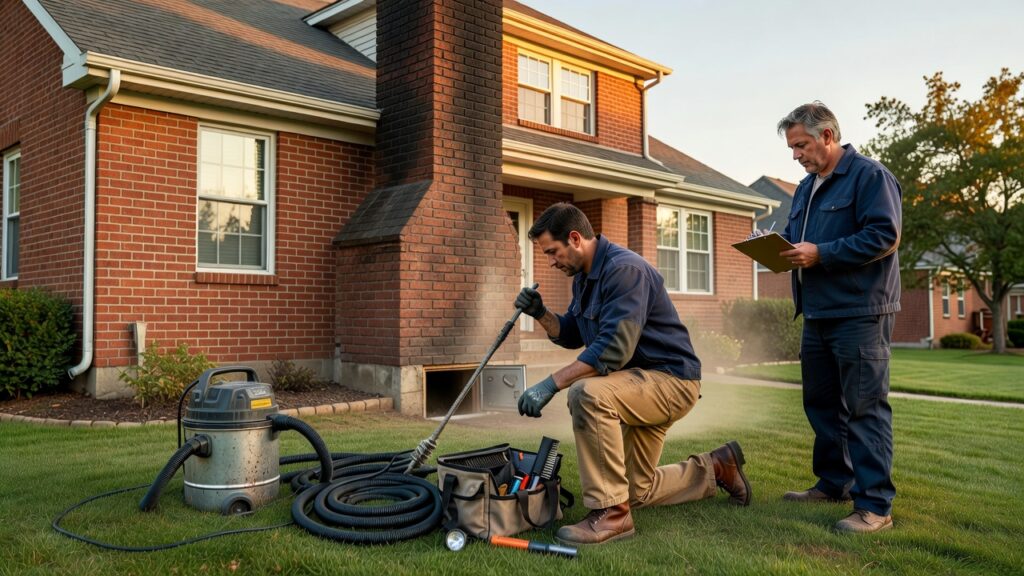
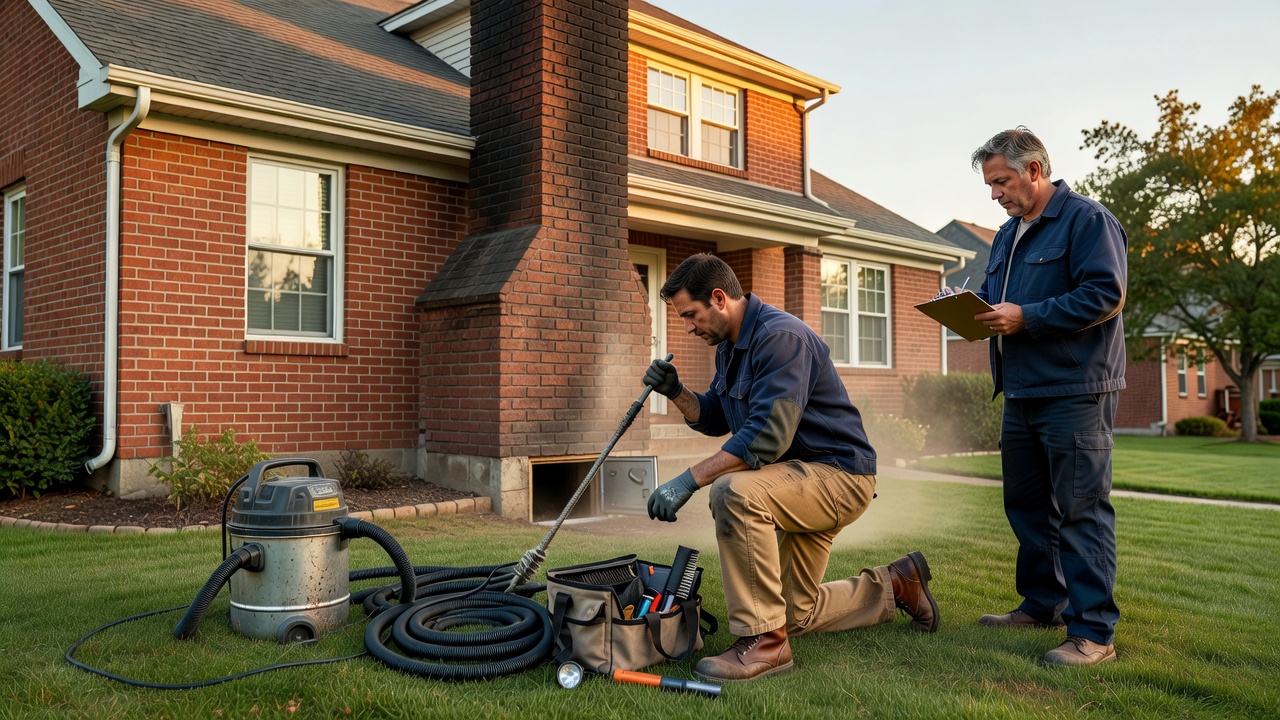
Second, chimney cleaning creates fine soot and creosote particles. Without appropriate containment, protective equipment, and a suitable vacuum system, these contaminants can spread throughout the home.
Third, brushing cannot establish whether the chimney is structurally sound. A flue may appear clean while still containing cracked tiles, damaged joints, deteriorating masonry, or other defects that affect safe operation.
The CSIA explains that standard brushing is effective for ordinary soot and creosote but has limited effectiveness against glazed deposits. Specialized mechanical methods may be necessary for harder buildup, and these techniques require appropriate equipment and experience.
The important distinction is that a clean chimney is not necessarily a safe chimney. Cleaning removes deposits, while inspection evaluates the condition of the chimney and its accessible components.
When Should You Call a Professional Chimney Sweep?
Certain situations warrant professional attention because they involve hidden defects, potentially hazardous deposits, or repairs that require specialized knowledge.
After Buying a Home
If you recently purchased a home in Woodbury, Deptford, or Mantua and do not have reliable documentation of the chimney’s condition, arrange an inspection before using the fireplace.
A Level 2 inspection is appropriate in circumstances such as a property transfer, a change to the heating appliance or fuel type, or a suspected chimney fire. The inspection includes the applicable Level 1 checks and an examination of the flue interior using video scanning or comparable methods. The inspector also evaluates accessible areas of the chimney system that may require additional attention.
A camera can help reveal cracks, missing liner sections, and other visible defects inside the flue. However, no inspection method can reveal every concealed defect without the necessary access.
When You Notice Hard or Glazed Creosote
If you notice shiny, hardened, or tar-like deposits inside the flue, do not assume an ordinary chimney brush will remove them effectively.
A professional can assess the deposit and determine whether specialized mechanical cleaning or an appropriate treatment is necessary. Do not continue burning wood while significant creosote buildup remains unaddressed.
When Smoke Enters the Room or Unusual Odors Develop
Smoke entering the living area, persistent smoky odors, and visible staining around masonry joints can indicate problems with draft, blockages, or damage to the chimney system.
These symptoms do not automatically prove that the liner is cracked, but they should not be ignored. Stop using the fireplace until the cause has been assessed. If you suspect a chimney fire, arrange a professional inspection before using it again.
When the Chimney Needs Repairs
Repairs involving mortar joints, flue liners, smoke chambers, chimney crowns, or flashing require the right materials and techniques for the particular chimney.
For example, a stainless-steel liner may be appropriate for certain installations, but the correct system depends on the appliance, fuel, flue dimensions, and applicable requirements. Masonry repairs and waterproofing also need to address the underlying cause of deterioration.
Permit requirements depend on the scope of work and the applicable local rules. Before beginning significant chimney repairs, ask the contractor whether permits or inspections are required for your project.
What Does Chimney Cleaning Cost in Woodbury, NJ?
Chimney cleaning prices vary according to the type of chimney, its height and accessibility, the number of flues, the amount of creosote buildup, and the work included in the appointment.
A routine cleaning for a straightforward, single-flue fireplace generally involves less work than a job involving multiple flues, difficult roof access, or hardened deposits. Structural repairs, liner replacement, and extensive masonry work are separate expenses.
Before approving additional work, request a written estimate that identifies the problem, the recommended repair, the materials involved, and the total cost. If a contractor recommends replacing a liner or performing extensive repairs, ask for photographs or other documentation supporting the recommendation.
Comparing written estimates can help you understand the scope of work and make an informed decision. The lowest price is not necessarily the best value if important inspection or cleaning tasks are excluded.
What Are the Risks of Skipping Chimney Maintenance?
Creosote buildup can ignite and cause a chimney fire. A fire inside the flue may damage the liner, crack masonry, or expose nearby combustible materials to dangerous heat. In some cases, a chimney fire can spread to other parts of the home.
Not every chimney fire produces dramatic flames or immediately obvious exterior damage. Signs of a possible chimney fire include cracked or collapsed flue tiles, a distorted chimney cap, damaged masonry, and evidence of smoke escaping through joints. The CSIA recommends having a chimney professionally evaluated if a chimney fire is suspected.
A chimney also needs attention even when it is rarely used. Animal nests, leaves, deteriorating mortar, water intrusion, and other obstructions or defects can compromise safe operation independently of creosote buildup.
Annual inspections help identify these problems before they become more serious. Cleaning and repairs should follow the findings of the inspection and the requirements of the particular chimney system.
Schedule Chimney Cleaning in Woodbury, NJ
Knowing what you can safely check yourself is useful, but removing ash and looking for visible damage cannot replace a professional chimney inspection. Creosote buildup, hidden liner damage, and ventilation problems may require specialized tools and expertise.
Evergreen Chimney serves Woodbury and surrounding Gloucester County communities, including Deptford and Mantua. If your chimney has not been inspected recently, you have noticed unusual smoke or odors, or you are unsure whether cleaning is needed, contact Evergreen Chimney to discuss an inspection and the appropriate next steps.
A professional assessment can help you understand your chimney’s condition, identify necessary maintenance, and make informed decisions before using your fireplace again.
Related from Evergreen Chimney Woodbury NJ: Chimney Sweep in Woodbury, NJ — Evergreen Chimney · Chimney Sweep in Woodbury — What It Costs, What You Get, and Who to Ca