
Chimney Sweep Deptford NJ: What Homeowners Should Know Before Hiring
Creosote can build up inside a chimney without being visible from the living space. For homeowners who use a wood-burning fireplace or stove, regular inspection and cleaning can help identify deposits, blockages, and other chimney problems before they become more serious.
The Chimney Safety Institute of America follows NFPA 211 guidance that chimneys, fireplaces, and vents should be inspected at least once a year, with cleaning, maintenance, and repairs performed when necessary. How often a chimney actually needs cleaning depends on factors such as how often it is used, the fuel burned, the installation, and burning habits.
Before Hiring a Chimney Sweep in Deptford
Think about how the fireplace or stove has been used since the last inspection. Frequent wood burning can lead to more soot and creosote deposits than occasional use. Burning wet or poorly seasoned wood can also increase smoke and contribute to inefficient combustion. EPA guidance recommends burning properly seasoned wood with moisture content of 20 percent or less.
You should also pay attention to warning signs. Smoke entering the home, unusual chimney odors, visible masonry deterioration, debris falling into the fireplace, or signs of animal activity can all justify a professional evaluation.
A chimney that vents an oil or other fuel-burning appliance should also be inspected and maintained as appropriate for that system. The inspection requirements can differ depending on the appliance and venting arrangement.
Step 1: Ask for the Appropriate Chimney Inspection
A chimney sweep and a chimney inspection are related services, but they are not exactly the same thing.
For routine chimney cleanings and annual inspections where the system will continue to be used without a significant change, CSIA identifies Level 1 as the appropriate inspection level. A Level 1 inspection focuses on readily accessible portions of the appliance, chimney, and connected venting system.
A higher inspection level may be appropriate when circumstances change or when there is reason to investigate areas beyond the normal scope of a Level 1 inspection. For example, a Level 2 inspection may apply after certain property transfers, appliance or fuel changes, operating malfunctions, or external events that could have damaged the chimney.
That means a camera inspection is not automatically required for every routine chimney cleaning. The appropriate inspection depends on the system and the circumstances.
Step 2: Understand the Type of Creosote or Deposits
Not all chimney deposits have the same characteristics. Soot and ordinary creosote deposits may be removable with standard sweeping equipment, while hard or glazed deposits can require more specialized mechanical cleaning.
CSIA’s homeowner guidance explains that cleaning methods should be selected according to the type of deposits present. Standard brushing is generally used for soot and ordinary creosote, while mechanical methods may be used for harder deposits or glaze.
Instead of asking a sweep to classify the chimney as “Stage 1,” “Stage 2,” or “Stage 3,” ask what type of deposit was found, how extensive it is, and what cleaning method is recommended.
The type of firewood you burn also matters. EPA recommends dry, seasoned wood and says wood burns best at a moisture content of 20 percent or less.
Step 3: Know What Professional Chimney Cleaning Involves
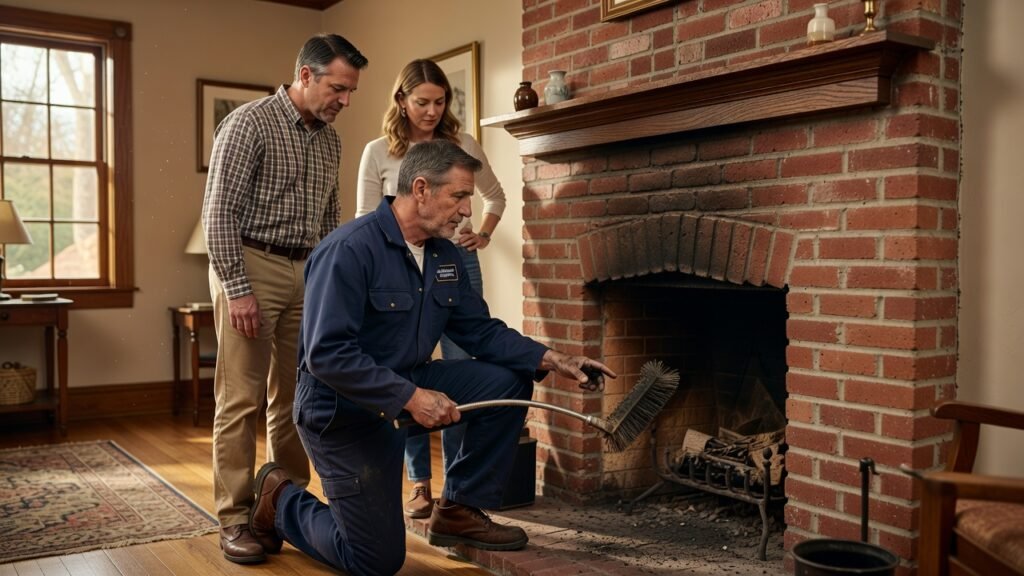
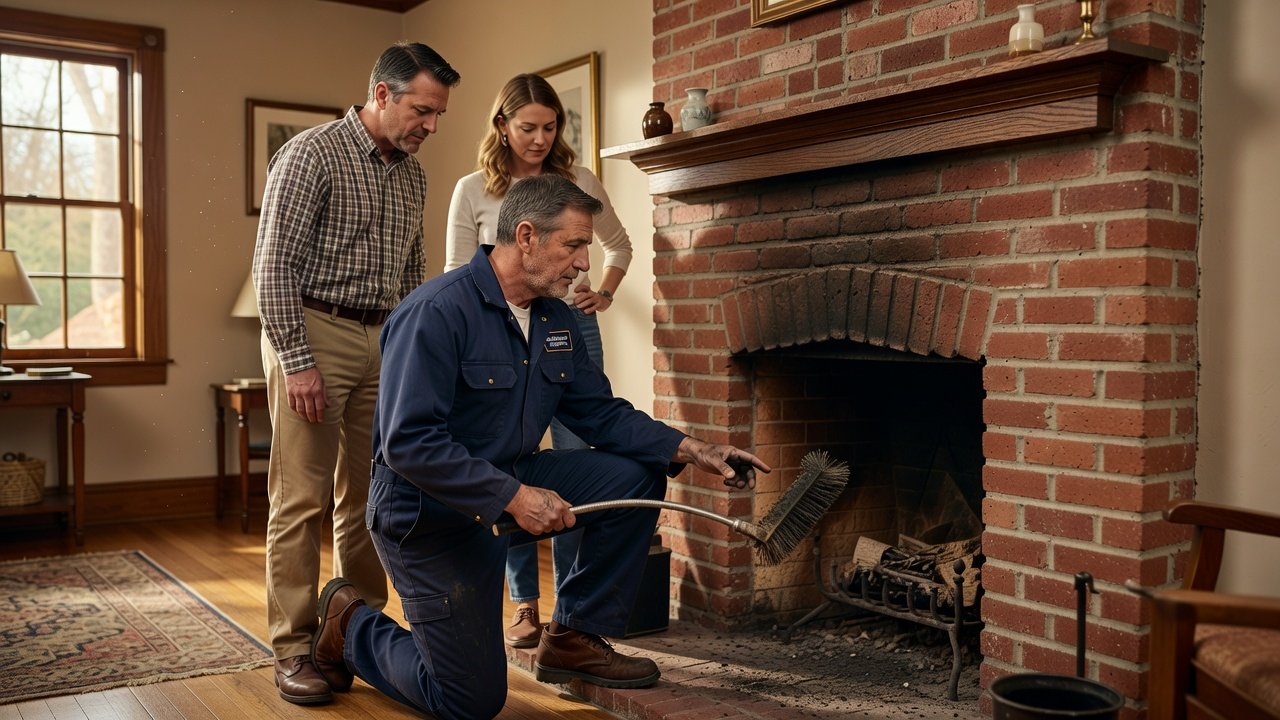
A professional sweep should use appropriate equipment to remove deposits from the chimney and help keep soot and debris from entering the home. CSIA notes that modern chimney sweeps use drop cloths, vacuums, and different types of brushes and rods depending on the system.
The scope of the work can vary according to the chimney design, appliance, accessibility, and condition.
After the cleaning, ask the technician what was found. A useful report should identify significant observations and explain whether additional maintenance or repair is recommended.
If the chimney’s internal condition needs further evaluation, ask whether photographs or video documentation are available. CSIA notes that written inspection reports and photographs can help communicate observed conditions to homeowners.
Step 4: Check the Chimney Exterior Too
A chimney problem is not always limited to the flue. During an inspection, the professional may identify exterior masonry deterioration, damaged components, visible cracks, or other conditions that warrant further evaluation.
Water can contribute to deterioration of masonry and chimney components, but the cause and severity of damage need to be evaluated on the individual chimney. Avoid assuming that every crack or stain requires the same repair.
A chimney cap can also help limit the entry of rain, leaves, and animals. If you notice debris or nesting material inside the fireplace or chimney, have the system evaluated before using it.
Step 5: Ask for a Written Estimate
Chimney cleaning and repair costs vary based on the system, accessibility, condition, amount and type of deposits, equipment required, and the work recommended.
For that reason, homeowners should be cautious about relying on a single advertised price for every chimney in Deptford or Gloucester County.
Before approving additional work, ask for a written explanation of:
- What was found
- What cleaning or repair is recommended
- Whether additional inspection is needed
- What equipment or materials will be used
- The estimated cost of the work
- Whether permits or other code requirements apply
New Jersey’s current construction-code framework adopted the 2024 editions of several International Codes, including the 2024 International Residential Code and International Mechanical Code, effective August 17, 2026. Applicable requirements depend on the type and scope of work.
Step 6: Ask When the Chimney Should Be Checked Again
There is no universal cleaning schedule that applies to every fireplace.
CSIA explains that cleaning frequency depends on factors including use, fuel, installation, and burning habits. Annual inspection is the important baseline, while cleaning should be performed when the deposits or condition of the system indicate that it is needed.
If you use your fireplace frequently, ask the sweep to explain what they found and why they recommend a particular maintenance schedule.
It is also worth asking about any changes you can make to improve operation, such as burning properly seasoned wood. EPA recommends annual professional inspection of wood-burning appliances and chimneys and recommends dry wood with moisture content of 20 percent or less.
What If Your Fireplace Smells Smoky?
A smoke or unusual chimney odor inside the home should not simply be dismissed as a seasonal issue.
EPA guidance says that if you smell smoke in your home, the appliance should be shut down and the venting system checked by a qualified professional. Smoke can be associated with problems involving the appliance, chimney, fuel, or venting system.
Do not assume that an odor automatically means creosote buildup or a draft reversal. A professional evaluation can help determine the actual cause.
Choosing a Chimney Sweep in Gloucester County
When comparing chimney professionals, ask about their experience with your type of fireplace, stove, or venting system. You can also ask whether the technician holds a recognized chimney credential such as CSIA certification.
CSIA recommends that homeowners consider certification, references, business history, insurance coverage, and who will actually perform the work.
A good chimney service should be able to explain its findings clearly rather than simply recommending repairs without documentation.
For Deptford homeowners, the goal should be more than simply getting the chimney brushed out. The inspection and cleaning should help you understand the condition of the entire venting system and what maintenance may be appropriate before you continue using the fireplace.
Related from Evergreen Chimney Woodbury NJ: Chimney Sweep in Woodbury, NJ — Evergreen Chimney · Chimney Sweep in Woodbury, NJ — Evergreen Chimney