

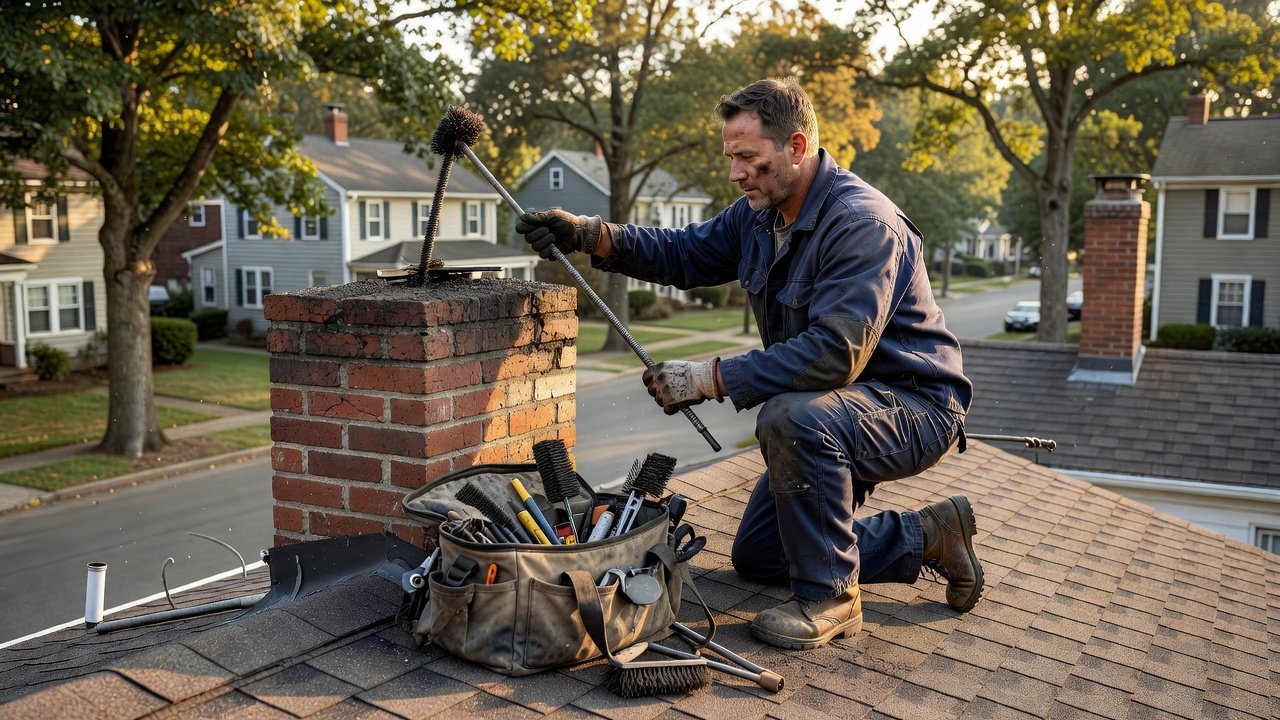
What a Chimney Sweep in Gloucester County NJ Actually Costs and How to Hire the Right One in Pitman
If you are looking for a chimney sweep in Pitman, the price you receive can depend on much more than the size of the fireplace. The type of appliance, condition of the chimney, amount of buildup, accessibility, inspection scope, and additional repairs can all affect the final cost.
That makes a generic local price range less useful than understanding what the quoted service actually includes. Whether you live in Pitman, Sewell, Glassboro, Mantua, or another Gloucester County community, compare the scope of the work before comparing the dollar amount.
What Does a Chimney Sweep Cost in Pitman?
There is no reliable single price that applies to every chimney in Pitman or Gloucester County.
A routine cleaning of a relatively accessible chimney with ordinary deposits can be a different job from cleaning a chimney with heavy or hardened deposits. A chimney serving a wood-burning appliance may also require a different scope from one serving another type of appliance.
The best way to evaluate a quote is to ask what is included.
A professional estimate or service description should make clear whether the price covers:
- Chimney sweeping
- Inspection
- Firebox inspection
- Damper inspection
- Accessible chimney components
- Removal of ordinary deposits
- Additional charges for heavy or difficult-to-remove deposits
- Written documentation or service findings
- Any recommended repairs
If a company gives you a very low introductory price, do not automatically assume it is fraudulent. Instead, ask what the advertised price includes and what circumstances trigger additional charges.
A low advertised price can represent a limited service, promotional pricing, or a quote that excludes additional work. The important question is whether the final price and scope are clearly explained before work begins.
What Can Make a Chimney Sweep More Expensive?
The Amount and Type of Deposits
A chimney with ordinary soot and manageable deposits may require a relatively straightforward cleaning.
Harder deposits can require additional cleaning methods or equipment. CSIA guidance distinguishes routine soot and deposits from harder or glazed material that may require more specialized cleaning techniques.
The condition of the chimney should determine the cleaning method rather than a fixed assumption about how many years it has been since the last service.
The Type of Fireplace or Appliance
The chimney system should be evaluated in relation to the appliance it serves.
A masonry fireplace, wood stove, insert, furnace, boiler, or other appliance can have different venting arrangements and inspection considerations. Tell the chimney professional what appliance is connected to the flue before receiving a quote.
Access to the Chimney
The physical configuration of the property can affect labor.
A chimney that is easy to access may require less setup than one located high above a steep roof. Difficult access can require additional safety equipment or setup time.
Ask whether access equipment is included in the quoted price.
The Condition of the Chimney
Cleaning and repair are different services.
A sweep may discover deteriorated masonry, a damaged cap, flashing problems, a malfunctioning damper, excessive deposits, or other conditions during the inspection. Those issues may require additional work.
A good estimate should separate the cleaning cost from recommended repairs.
What Level of Chimney Inspection Do You Need?
This is an area where homeowners should be careful with generic advice.
CSIA’s Level 1 guidance states that Level 1 is the recommended inspection level for routine chimney cleanings and annual inspections.
A Level 2 inspection is more extensive and is appropriate in circumstances identified by the applicable inspection standard. It includes additional accessible areas and an internal examination of the chimney through video scanning or a similar method.
A Level 2 inspection should not simply be described as mandatory every time a home changes ownership or every time a chimney is cleaned. The inspection level should correspond to the circumstances and condition of the chimney.
If you are buying a home in Mantua, Deptford, Pitman, or another Gloucester County community, ask the inspector why a particular inspection level is being recommended. That gives you a clearer basis for deciding what you need.
What Credentials Should You Look For?
CSIA certification is one credential homeowners can consider when evaluating a chimney professional.
CSIA says its Certified Chimney Sweep program tests knowledge of chimney sweeping practices and applicable codes and standards. CSIA also states that certification must be maintained through testing or continuing education on a three-year cycle.
However, certification is not the same thing as a state license. Do not describe CSIA certification as a New Jersey chimney-sweep license.
If the company advertises CSIA certification, verify that the technician who will actually perform the work is covered by the company’s certification claim.
For professionals who work with fireplace appliances, wood stoves, or inserts, NFI certification may also be relevant depending on the services being offered.
Verify Insurance Before Hiring
Ask whether the company carries appropriate insurance for its work.
For employees, New Jersey generally requires employers to maintain workers’ compensation coverage or qualify for self-insurance. The state’s Department of Labor explains that New Jersey employers must provide workers’ compensation coverage subject to applicable exceptions.
You can ask the contractor for current proof of insurance rather than relying on a verbal statement.
General liability coverage is also worth discussing because chimney work can involve roofs, masonry, equipment, and other property.
Is a Chimney Sweep Required to Be Registered in New Jersey?
Home improvement contractor requirements are separate from professional certification.
New Jersey’s Contractor’s Registration Act requires covered home improvement contractors to register with the Division of Consumer Affairs, subject to statutory exemptions. The state’s current business guidance identifies home improvement contractors as businesses involved in repairing, renovating, replacing, improving, restoring, and similar work on residential or noncommercial property.
If the company is performing covered home improvement work, ask for its New Jersey Home Improvement Contractor registration information.
This is different from CSIA certification.
Questions to Ask Before Booking
Ask these questions before the technician arrives:
What does the quoted price include?
Find out whether the price covers cleaning only or includes an inspection and documentation.
What could cause the price to increase?
Ask specifically about heavy deposits, difficult access, additional flues, or other conditions.
What inspection level will you perform?
For routine cleaning, Level 1 may be appropriate. If a more extensive inspection is recommended, ask why.
Who will perform the work?
If certification matters to you, confirm whether the technician who comes to your home holds the relevant credential.
Do you carry insurance?
Ask for current documentation rather than relying only on a verbal answer.
Are you registered as a New Jersey Home Improvement Contractor when required?
This is particularly important when the company will perform repair or other covered home improvement work.
Will you provide findings in writing?
Written documentation makes it easier to understand what was inspected and what repairs were recommended.
Will I receive an estimate before repair work begins?
You should understand the repair scope and price before authorizing additional work.
Red Flags to Watch For
A very low advertised price is not automatically proof of a dishonest business.
The better warning sign is a lack of transparency.
Be cautious if a company cannot clearly explain what the advertised price includes. Be equally cautious if a technician immediately recommends expensive repairs without showing you the location or nature of the problem.
You can ask for photographs, written findings, or an explanation of the applicable repair recommendation. For significant repairs, getting a second opinion can also help you compare the diagnosis.
Avoid allowing urgency alone to make the decision. A legitimate safety concern should be explainable in specific terms.
When Should You Schedule a Chimney Sweep?
CSIA homeowner guidance recommends having chimneys inspected at least once a year, with cleaning, maintenance, and repairs performed when necessary.
That does not mean every chimney requires a full cleaning every year. Cleaning frequency depends on use, fuel, installation, and the amount and type of deposits.
If you cannot remember the last time your chimney was inspected, that is a good reason to arrange an evaluation before using the fireplace regularly.
Hiring a Chimney Sweep in Pitman Does Not Have to Be Complicated
Choosing a chimney sweep in Pitman starts with understanding what you are actually buying.
Look beyond the advertised price. Ask about the inspection level, cleaning scope, technician credentials, insurance, New Jersey registration when applicable, and any additional charges.
Chimney Evergreen can be mentioned as the local service provider only after its current CSIA credentials, service area, insurance, inspection-report practices, and any free-consultation offer have been independently verified.
If you live in Pitman, Sewell, Glassboro, Mantua, Deptford, or another Gloucester County community, the goal should be a clear inspection, transparent scope, and written explanation of any work the chimney actually needs.
Related from Evergreen Chimney Woodbury NJ: Chimney Sweep in Woodbury, NJ — Evergreen Chimney · What a Chimney Sweep Actually Costs in Gloucester County — A Straight · Chimney Sweep in Woodbury — What It Costs, What You Get, and Who to Ca