
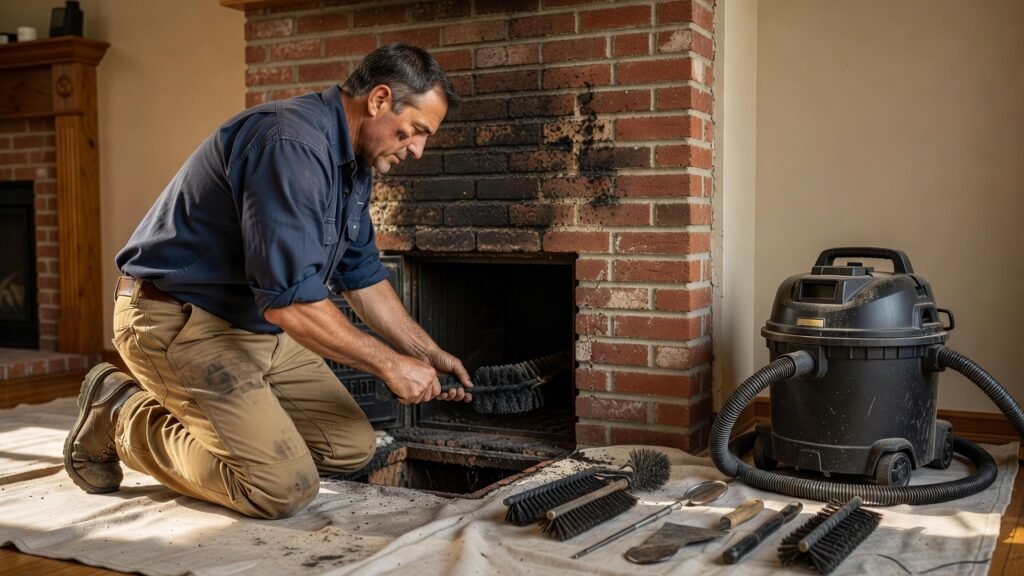
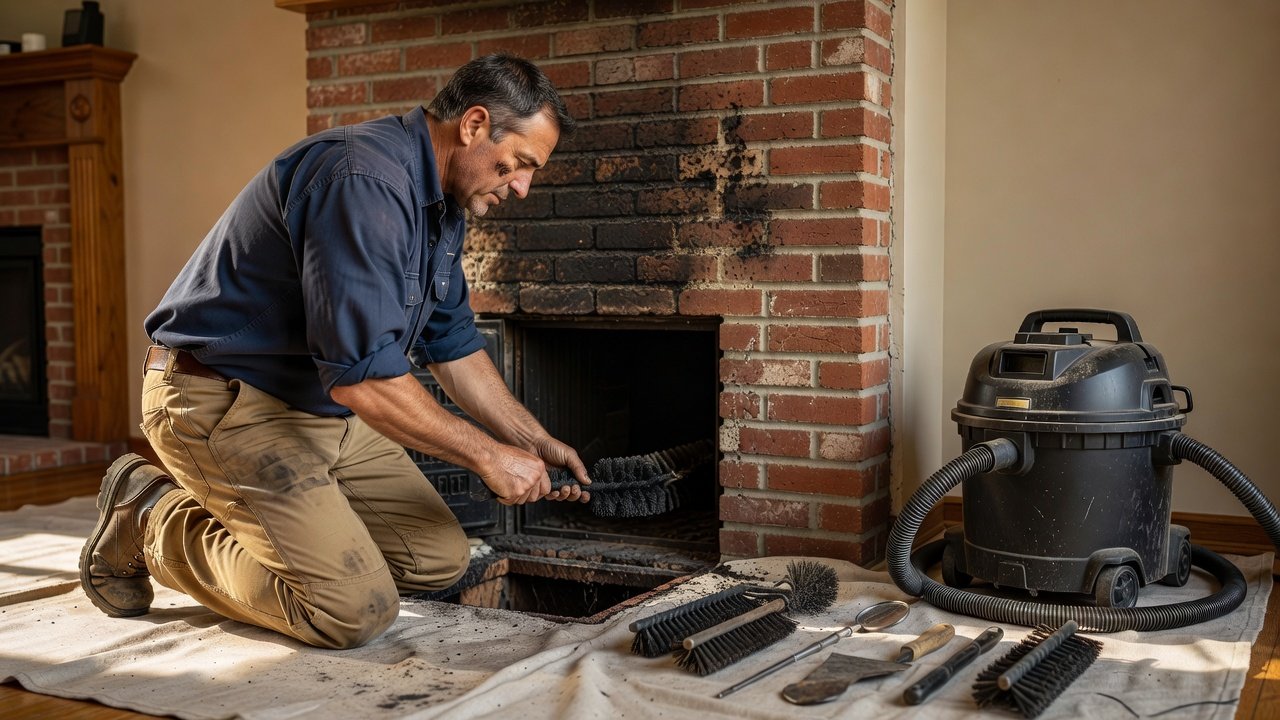
Creosote Removal in Woodbury NJ: What You Can Handle and When to Call a Pro
Homeowners in Woodbury who burn wood regularly have probably heard of creosote. Fewer know how it forms, how its condition can vary, and when chimney cleaning should be handled by a professional. Understanding that distinction matters because creosote is combustible and can accumulate inside parts of the chimney that are difficult to see from the fireplace.
CSIA recommends that chimneys, fireplaces, and vents be inspected at least once a year. Cleaning, maintenance, and repairs should be performed when necessary. The organization also recommends sweeping masonry fireplaces when sooty buildup reaches approximately 1/8 inch, or sooner when glaze is present.
What Creosote Is and Why It Matters
Creosote forms when combustion byproducts from burning wood cool as they move through the chimney and condense on the interior surfaces. EPA describes creosote as a highly combustible black or brown residue that can accumulate inside a chimney and contribute to chimney fires.
Several factors can increase creosote formation. Burning unseasoned wood produces more smoke. Restricted airflow can allow smoke to remain in the flue longer. A colder chimney can also encourage condensation.
It is better to describe deposits by their condition rather than using a universal “stage one, stage two, stage three” classification. CSIA discusses ordinary soot and creosote deposits separately from hard, tacky, or glazed deposits that can require specialized cleaning methods.
Hard or glazed deposits can be more difficult to remove than ordinary soot. CSIA notes that professional sweeps may use mechanical cleaning equipment for hard deposits. Chemical treatments can sometimes help change the characteristics of difficult deposits so they can be removed mechanically, but chemical products should not replace professional inspection or mechanical cleaning.
What a Homeowner Can Safely Handle
There are some basic maintenance tasks homeowners can perform without attempting to clean the entire chimney.
Remove Cool Ash
Once ashes are completely cool, they can be removed from the firebox using appropriate precautions. EPA recommends allowing ash to cool before removal and taking steps to reduce exposure to ash inside the home.
Use an appropriate metal container with a secure lid and keep the container away from combustible materials.
Inspect the Visible Firebox
You can look at the visible firebox with a flashlight and note obvious cracks, loose masonry, or other changes.
This is not a substitute for a chimney inspection. Problems farther up the chimney may not be visible from the firebox.
Check Your Firewood
One of the most useful things a homeowner can do is burn properly seasoned wood. EPA recommends wood with moisture content below 20 percent and recommends storing firewood so it can dry properly.
Burning dry wood and maintaining good airflow can reduce smoke and help reduce creosote formation.
Be Careful with Chemical Creosote Products
Some chemical products are designed to assist with creosote removal. CSIA recognizes that certain products may be useful as part of a professional cleaning process.
However, CSIA specifically warns that chemical cleaning products are not a substitute for inspection and professional mechanical cleaning.
A homeowner should therefore not treat a creosote-removal product as proof that the chimney is clean.
When to Call a Professional
Hard, Tacky, or Glazed Creosote
If you discover substantial hard or glazed deposits, professional cleaning is the safer approach. CSIA states that mechanical cleaning equipment may be necessary for hard creosote or glaze and warns that improper use of mechanical cleaning equipment can be hazardous to both the operator and chimney.
Do not assume that a consumer brush will remove every type of deposit.
You Need a Complete Chimney Inspection
An inspection is different from cleaning.
A professional can evaluate accessible portions of the fireplace and chimney and determine whether additional inspection is appropriate. A camera can be useful when the interior condition of the flue needs closer evaluation, but video inspection is not automatically required for every routine Level 1 inspection.
CSIA recommends annual inspection of chimneys and venting systems.
You Suspect a Damaged Liner
Cracked or collapsed flue tiles can be signs of chimney damage. CSIA identifies cracked or collapsed flue tiles, large missing pieces, exterior masonry cracks, and evidence of smoke escaping through masonry or liner joints among the signs professionals look for after a chimney fire.
Do not attempt to repair or replace a chimney liner yourself.
You Find an Animal Nest
Animals can enter chimneys through openings or damaged caps. CSIA specifically notes that animals can build nests in chimneys even when a fireplace is not used frequently.
Chimney swifts require particular caution. The U.S. Fish & Wildlife Service identifies them as protected migratory birds under the Migratory Bird Treaty Act and states that their eggs and nests are protected.
If you discover an active nest, do not disturb it yourself. Contact an appropriately qualified professional for guidance.
The Work Requires Roof Access
Roof work introduces fall hazards. Homeowners should not assume that accessing a chimney from the roof is a simple DIY task.
If inspection or repair requires roof access, hiring a qualified professional is generally the safer option.
What Can Happen When Creosote Is Left Behind
A chimney can look clean from the fireplace opening while deposits remain farther up the flue.
CSIA identifies several signs associated with chimney-fire damage, including warped metal components, cracked or collapsed flue tiles, distorted rain caps, creosote flakes on the roof or ground, damaged roofing materials, and cracks in exterior masonry. (csia.org)
That is why sweeping should not be reduced to brushing the portion of the chimney that is easiest to reach.
A chimney fire can also damage components even when the homeowner does not immediately notice a dramatic event. If you suspect a chimney fire has occurred, stop using the system and have it professionally evaluated.
How to Choose a Creosote Removal Company in Woodbury NJ
Start by checking the company’s credentials and experience.
Ask About CSIA Certification
Ask whether the technician is a CSIA Certified Chimney Sweep. CSIA provides certification information and a directory that homeowners can use when evaluating chimney professionals.
Ask About Insurance
Request proof of appropriate liability insurance. If employees are performing the work, ask about workers’ compensation coverage.
Certification and insurance are separate issues. A professional credential does not automatically establish what insurance a company carries.
Ask What the Cleaning Includes
A written estimate should explain the service being performed. Ask whether the appointment includes sweeping, inspection, documentation, and any additional diagnostic work.
Ask How Difficult Deposits Are Handled
If hard or glazed creosote is present, ask what cleaning method the technician recommends and why. CSIA recognizes mechanical cleaning and, in certain circumstances, professional chemical treatment as possible approaches depending on the deposit.
Ask for Documentation
For significant findings, ask whether the company provides photographs or a written report. This can help you understand the condition of the chimney before approving additional work.
Red Flags When Hiring a Chimney Sweep
Be cautious about companies that refuse to explain what their service includes.
Also be careful when a technician recommends expensive repairs without documenting the condition that supposedly requires them. Ask for photographs or other inspection findings and consider another professional opinion before approving major non-emergency work.
Extremely low advertised prices should also be examined carefully. A low price is not automatically evidence of a problem, but homeowners should understand exactly what the advertised service includes before booking.
There is no reliable single price for creosote removal in Woodbury or Gloucester County. The scope depends on the amount and condition of deposits, chimney configuration, accessibility, and whether additional inspection or repair is needed.
How to Reduce Creosote Formation
The best way to manage creosote is to reduce the conditions that encourage excessive buildup.
EPA recommends:
- Burn dry, seasoned wood
- Aim for wood moisture below 20 percent
- Maintain good airflow
- Avoid burning garbage, plastics, or treated wood
- Have the wood-burning appliance and chimney professionally inspected annually
If you smell smoke inside the home while using the appliance, EPA advises shutting down the appliance and having the system inspected.
When to Schedule Creosote Removal in Woodbury
Do not wait for visible heavy buildup before thinking about chimney maintenance.
CSIA recommends annual inspection, with cleaning performed when necessary. The amount and type of use, fuel, installation, and burning habits all affect how frequently a chimney needs cleaning.
If you burn wood regularly, have not had the chimney inspected recently, notice unusual deposits, or suspect a blockage, schedule an evaluation before continuing regular fireplace use.
The Bottom Line
Some fireplace maintenance can be handled by a careful homeowner. Removing cool ash, checking the visible firebox, and burning properly seasoned wood are reasonable maintenance steps.
Creosote removal is different when deposits are hard, tacky, or glazed, when the chimney needs a complete inspection, or when there may be liner damage or an obstruction. Those situations call for professional evaluation and appropriate equipment.
For homeowners in Woodbury, Deptford, Mantua, and surrounding Gloucester County communities, the safest approach is to have the chimney inspected annually and cleaned whenever its condition requires it. Do not rely on a chemical product or a quick brush of the visible firebox as proof that the entire chimney is clean.
Related from Evergreen Chimney Woodbury NJ: Chimney Sweep in Woodbury — What It Costs, What You Get, and Who to Ca