
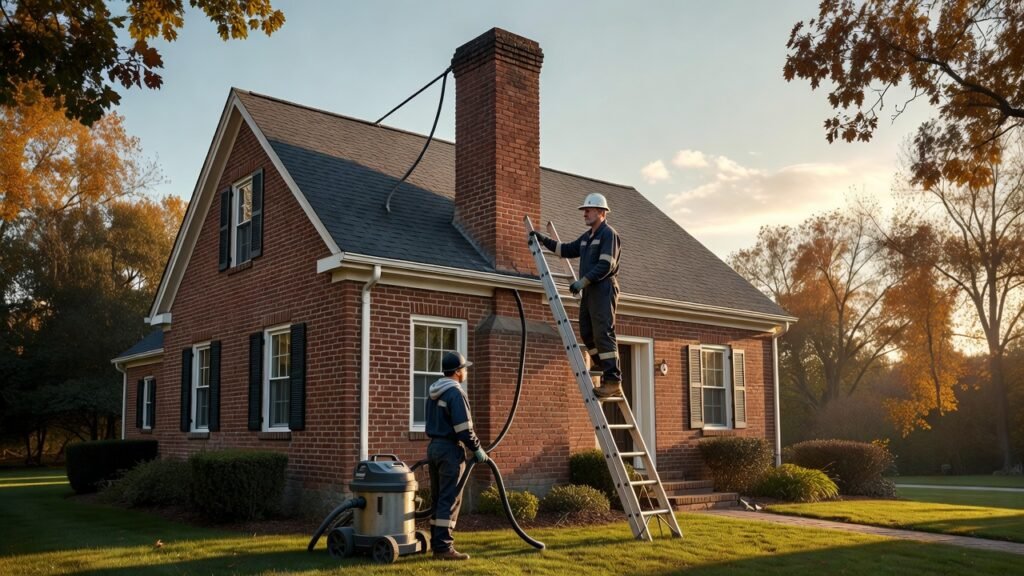
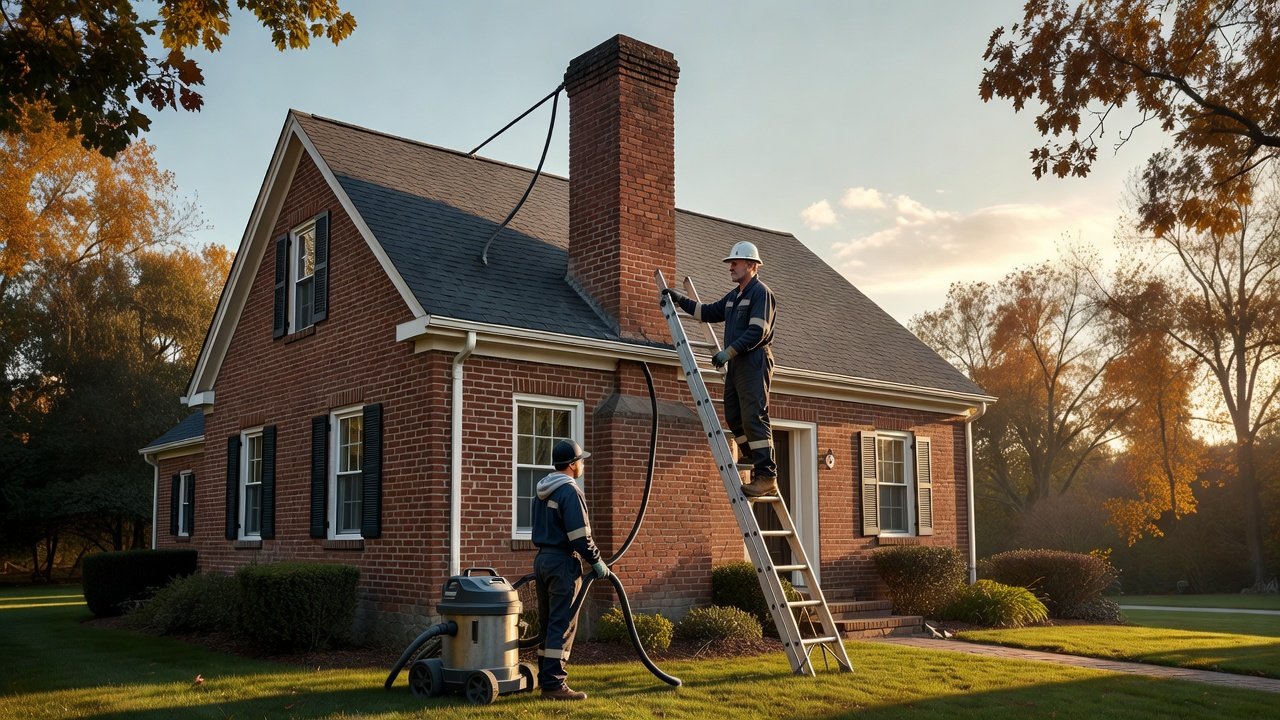
How to Get Your Chimney Cleaned in Woodbury, NJ Before the Season Gets Busy
If you use a fireplace or wood-burning appliance in Woodbury, NJ, waiting until the first cold weekend to think about chimney maintenance can leave you trying to schedule service at the same time as everyone else.
There is no official month when every chimney must be cleaned. Current CSIA guidance follows NFPA 211 in recommending that chimneys, fireplaces, and vents be inspected at least once a year, with cleaning, maintenance, and repairs performed when necessary. How often a chimney actually needs cleaning depends on factors such as use, fuel, installation, and burning practices.
That makes late summer and early falls a practical time to get ahead of the season. But the most important thing is not choosing a particular month. It is knowing what service your chimney actually needs.
Before You Book: Know the Difference Between Cleaning and Inspection
Chimney cleaning and chimney inspection are related, but they are not the same service.
Cleaning removes soot, creosote, and other deposits or obstructions from the chimney and related areas.
Inspection evaluates the condition and serviceability of the chimney, fireplace, venting system, and accessible components.
CSIA recommends annual inspection even when a chimney is not heavily used because animals can build nests and other deterioration can develop during periods when the fireplace is idle.
You should also avoid assuming that every homeowner automatically needs a Level 2 inspection.
A Level 1 inspection is generally appropriate when the chimney is being used under the same conditions and its accessible components can be adequately evaluated. A Level 2 inspection is more extensive and is used when circumstances warrant additional evaluation, including certain changes to the system, property transfers, or suspected damage.
If you recently bought a Woodbury home or have no reliable service history, tell the chimney professional. They can determine which inspection level is appropriate.
Step 1: Schedule Before You Need the Fireplace
Late summer and early fall can be convenient times to arrange chimney service.
You have time to address deposits, obstructions, or repairs before regular fireplace use begins. If an inspection identifies a problem that requires additional work, finding it early gives you more time to decide how to proceed.
There is no reliable evidence that every Woodbury sweep is operating at a specific percentage of capacity during July or that fall appointments universally require two or three weeks of waiting. Those claims vary by company and season.
The useful takeaway is simpler: don’t wait until the first cold weekend if you already know your chimney needs attention.
And if your chimney already needs cleaning, don’t postpone it simply because summer has passed.
Step 2: Look for a Qualified Chimney Professional
When comparing chimney companies, look for a professional with appropriate training and credentials.
CSIA certification is one credential homeowners can consider when choosing a chimney professional. CSIA says its certified sweeps are tested on chimney and venting systems, including applicable safety standards.
When you call, ask:
- Who will perform the inspection or cleaning?
- Is that person CSIA certified?
- What type of inspection is included?
- Does the quoted service include cleaning of the chimney flue and smoke chamber?
- Will you receive documentation of the findings?
- If repairs are recommended, will you receive a written estimate?
You can also verify credentials rather than relying solely on an advertisement.
Step 3: Understand What a Proper Chimney Cleaning Includes
A complete chimney sweeping is more than brushing the visible firebox.
CSIA explains that a complete sweeping includes the chimney flue and smoke chamber. Standard cleaning generally uses brushes along with a properly filtered vacuum to control soot and debris. Hard creosote or glaze may require specialized mechanical cleaning equipment.
The exact process varies according to the chimney and the type of deposits present.
A professional may also evaluate accessible components during the inspection, including the damper, chimney exterior, cap, masonry, and other parts of the system.
There is no reliable universal 45-minute-to-90-minute timeframe. A straightforward chimney may require less time than a system with significant buildup, difficult access, multiple flues, or other complications.
Step 4: Ask What Is Included in the Price
Avoid choosing a chimney company based only on a low advertised starting price.
A quoted cleaning may or may not include an inspection, additional flues, smoke chamber cleaning, specialized creosote removal, camera inspection, or repairs.
Before approving the work, ask for clarification.
A useful checklist is:
- Is this price for cleaning only?
- Is a Level 1 inspection included?
- Is the smoke chamber included?
- Is the fireplace or stove included?
- Are additional flues priced separately?
- What happens if hard or glazed deposits are found?
- How much does a Level 2 inspection cost if one becomes necessary?
- Are repairs separate from the cleaning charge?
CSIA recommends mechanical cleaning when necessary and explains that cleaning methods should be selected according to the type of deposits found.
Step 5: Prepare Your Home Before the Appointment
A little preparation can make the appointment easier.
Remove loose items from around the fireplace and give the technician clear access to the hearth. Keep children and pets away from the work area while the chimney is being serviced.
If you have previous inspection or cleaning records, make them available.
It is also useful to tell the technician how frequently you use the fireplace, what fuel you burn, and whether you have noticed unusual smoke, odors, draft problems, or other changes.
CSIA notes that cleaning frequency depends partly on use, fuel, installation, and burning habits, so that information can help the professional evaluate the chimney appropriately.
Step 6: Pay Attention to What the Technician Finds
A professional should be able to explain what was found rather than simply handing you a list of repairs.
Ask for photographs or other documentation when appropriate.
For example, CSIA identifies conditions such as cracked or collapsed flue tiles, damaged rain caps, exterior masonry cracks, warped metal components, and creosote flakes as signs that deserve professional attention.
If the technician recommends additional work, ask:
What exactly is damaged?
How was the problem identified?
Is the fireplace safe to use right now?
What happens if the repair is postponed?
Does the recommendation require a more detailed inspection first?
Those questions can help you distinguish necessary work from an upgrade or optional improvement.
Step 7: Get a Written Estimate for Repairs
Cleaning and repairs should not automatically be treated as one package.
If the inspection reveals damaged masonry, a liner problem, a deteriorated cap, or another defect, ask for the recommended repair in writing.
There is no responsible universal price for chimney repairs because the scope can vary considerably between properties.
For larger repair projects, getting another estimate can also help you understand whether the proposed scope and price are reasonable.
The important thing is to compare the scope of work, not just the final dollar amount.
What About Creosote?
Creosote is one of the main reasons chimney cleaning becomes necessary in wood-burning systems.
However, it is better to avoid describing creosote as a mandatory three-stage progression.
CSIA distinguishes between ordinary soot and creosote deposits and harder or glazed deposits that may require more specialized cleaning. Standard brushing can be effective for ordinary deposits, while mechanical cleaning methods may be needed for hard creosote or glaze.
CSIA recommends cleaning masonry fireplaces at approximately 1/8 inch of sooty buildup and sooner when glaze is present. Its homeowner guide also states that cleaning is needed when soot and creosote approach or exceed 1/4 inch, with glaze exceeding 1/8 inch requiring removal.
The condition of the deposits matters more than simply how many years it has been since the last cleaning.
What If Your Fireplace Smells After Cleaning?
A persistent chimney odor deserves attention rather than being automatically dismissed as normal.
CSIA explains that chimney odors can be related to deposits inside the chimney and that air movement can draw those odors into the home. It also notes that a tight-sealing top-mounted damper can sometimes reduce airflow coming down the chimney.
Draft problems can have multiple causes.
The EPA also notes that fireplaces and wood stoves can contribute to back-drafting and that improperly installed or maintained chimneys and flues can allow combustion pollutants into living spaces.
If you notice smoke or combustion odors inside the home, have the system evaluated rather than assuming the problem will disappear after another fire.
The Bottom Line for Woodbury Homeowners
The easiest way to avoid a last-minute chimney problem is to schedule an inspection before you need the fireplace regularly.
Late summer and early fall can be convenient times to get the process started, but there is no reason to wait for a particular season if your chimney already needs attention.
A professional can determine whether the chimney needs cleaning, whether deposits require specialized removal, and whether a more detailed inspection or repair is appropriate.
The goal is not to pay for every service a contractor offers.
It is to understand what your chimney actually needs before you rely on it for another season.
If your Woodbury chimney has not been inspected recently, scheduling a professional evaluation before regular fireplace use is a sensible first step.
Related from Evergreen Chimney Woodbury NJ: Chimney Sweep in Woodbury, NJ — Evergreen Chimney · Chimney Sweep in Woodbury, NJ — Evergreen Chimney